

Key takeaways
- Liposomal NMN isn’t supported by human clinical evidence. More specifically, there are no published human trials to date showing that liposomal NMN improves NAD levels more effectively than standard oral NMN.
- Oral NMN, on the other hand, is well absorbed and biologically effective—with multiple human studies to back that up.
- All major NMN and NR research uses oral capsules—not liposomal formulas.
- Liposomal supplements face real stability, consistency, and release challenges
- Claims about liposomal NMN are largely theoretical and marketing-driven.
- Choosing a quality NMN supplement matters more than delivery tech.
Forget the idea that getting older automatically means less energy, more wrinkles, a slower mind and a faster slide to age-related disease. NAD, or nicotinamide adenine dinucleotide, is the coenzyme at the center of more than 500 enzymatic processes in the body—and it may be the most important molecule you’ve never heard of. Some brands are touting liposomal NMN as the most efficient and bioavailable way to raise NAD levels, but those claims aren’t bearing out in the science—at all.
As we age, NAD production slows, gumming up the works in ways that present as the typical hallmarks of aging—a fuzzier mind, slower recovery times, less energy, even wrinkles and gray hair, not to mention far more serious age-related diseases, from cancers to cardiovascular conditions and well beyond.
But there’s a workaround. Supplementing with NMN, or nicotinamide mononucleotide, can actually slow down the effects of time by revving up NAD production to more youthful levels. And the effects are impressive. So what’s the catch? With more manufacturers bringing NAD products to the market, it’s up to the consumer—that’s you—to perform a little due diligence before making a purchase. The goal is to boost NMN at a cellular level, which makes the method of delivery key. Here’s what the clinical research actually shows about liposomal NMN and what it tells us about the better alternative.
Quick answer:
Liposomal NMN has no reliable scientific basis. It lacks the foundational testing needed to establish a delivery advantage, and its stability problems actively work against the bioavailability benefit it claims to offer. The proven option? Standard oral NMN. It’s well absorbed, reliably raises NAD levels, and has multiple independent human trials behind it.
What is NMN and why is it important?
NMN is what’s known as an NAD precursor (NR, or nicotinamide riboside, is another one), and it’s a truly impressive little compound with two standout features. First, NMN is easily absorbed in the body. Second, it’s very resilient in the digestive tract, which means it does a great job of getting where it needs to go—and staying intact in the process.
While NMN and NR are molecularly quite similar, NMN has an additional phosphate group that makes it slightly bigger. Current research suggests that this phosphate group is first removed outside the cell by an enzyme called CD73, converting NMN to NR, which then enters through equilibrative nucleoside transporters (ENTs). Once inside, NR converts back to NMN—and from there, NAD synthesis begins. That’s precisely the goal.

What does NMN stand for?
NMN is the catchy shorthand for nicotinamide mononucleotide, which is the full, formal name. It spares us from working through all eleven of those syllables (and fits much better on product labels!).
How does NMN relate to NAD?
NMN is the immediate precursor to NAD. While you might assume that taking NAD directly is the most effective way to amp up NAD in the cells, it doesn’t actually work that way. NAD itself is a pretty temperamental molecule. Not only is it quite big, it’s sensitive to heat and doesn’t do a great job of making its way from your bloodstream into your cells. Research to date shows that oral NAD supplementation doesn’t do much, and there are a lot of shrugs about the efficacy of NAD IV therapy. Researchers from a 2020 review put it like this: “the metabolism of intravenously infused NAD/NADH is currently unclear.”
Instead, science has shown that the best way to improve NAD is with a precursor like NMN. And it’s a pretty big deal. Wonderfeel’s own Dr. Andrew Salzman, a leading biomedical expert, describes NAD precursors as one of the biggest breakthroughs in longevity science. “The real breakthrough that’s occurred is how to get NAD levels back to normal,” he says. “We now understand that it can’t be done by giving NAD itself, but it can be done by supplying the starting material.” In other words, NMN is the building block our cells need to kickstart the kind of NAD production we enjoyed when we were younger.
Why is NAD crucial for our health?
Above, we described NAD as a pretty important coenzyme. That’s putting it mildly. Without NAD, life as we know it doesn’t even exist. While declining NAD levels are a normal part of the chronological aging process, it’s also a trigger to all kinds of age-related issues—think metabolic disorders and neurodegenerative diseases and cancers. The decline can actually begin as early as our 30s, and by the time we reach the half-century mark, we have roughly half the NAD we did at age 20.
The amazing thing is that NMN supplementation makes it possible to reverse this trend, bumping up NAD production and rolling back the years on our biological clock.
Understanding liposomal technology
Now, how does liposomal technology fit into all of this? Well, depending on what you read or who you listen to, liposomal delivery is the hands-down best way to get key compounds into our system. But there’s a little more to the story.
What are liposomes?
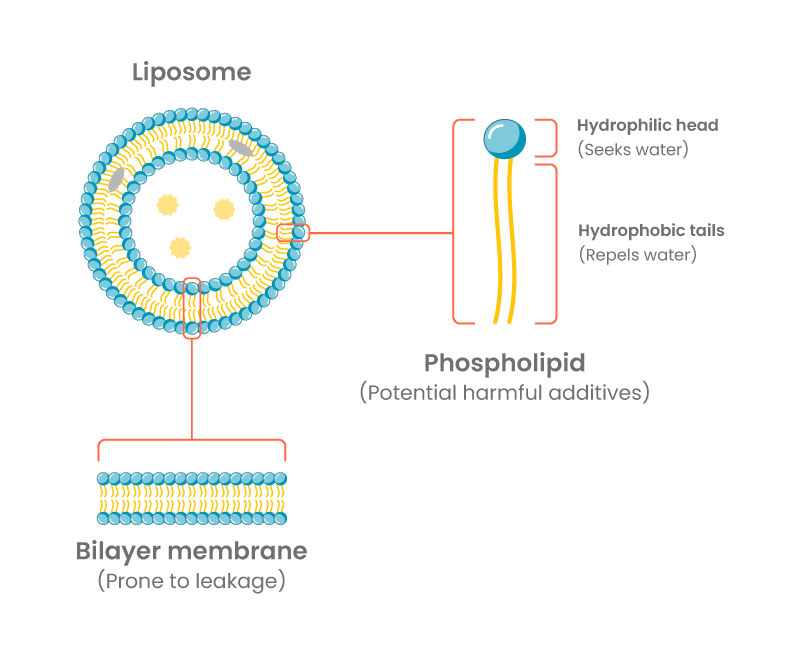
Liposomes are essentially minuscule bubbles of a fat-like substance that surround an active ingredient to protect it on its journey through the body, and specifically in the digestive tract. In theory, they sound pretty great. But the technology has fairly serious drawbacks. But before we get into that, let’s review how this technology works and why it’s getting fairly significant air time.
How does liposomal delivery work?
Basically, liposomes function as little bodyguards, protecting the star of the show as it makes its way through hostile stomach acids and facilitating absorption into the bloodstream. Indeed, proponents of liposomal delivery highlight its bioavailability, meaning as much of the active ingredient as possible makes it to its intended destination. But while that may be true in some instances, it’s nothing more than a theory when you’re talking about liposomal NMN specifically.
What are the benefits and drawbacks of liposomal supplements?
Again, the big appeal is the supposed efficacy of absorption. But there are some major concerns about this form of delivery. A 2024 study offers a comprehensive breakdown of the problems of liposomal drug technology, so let’s briefly run through the issues:
- Low stability. Liposomes can be prone to leaking, both when they’re stored and when they’re used. To be blunt, that tendency makes a mockery of the whole bioavailability advantage, since it’s clearly compromising efficacy.
- Limited circulation time. In the bloodstream, liposomes don’t often function well for long, and modifications are often made to improve stability. Temperature, pH levels, and enzymatic activity can all lead to liposomal degradation. Again, problematic, especially for a supplement.
- Worrisome added ingredients. While liposomes themselves are generally biocompatible, that’s not always true for the surfactants, phospholipids, and other stabilizing agents used. Poor formulations can mean toxicity or troubling immune system interactions.
- Scalability and variability hurdles. Mass production of liposomal supplements, including NMN, is another problem. The preparation of liposomal carriers is intricate and precise, and there’s a lot of room for error. The fact is, reproducing desirable liposome properties is really tricky to maintain across large batches—and the more advanced the liposomal system, the harder it becomes.
- And about that bioavailability benefit… A sticking point for liposomal drugs is the challenge in getting the active ingredient to “let go” of its carrier—the liposome—and release itself at the right place and time. In some instances, the encapsulated compound doesn’t release effectively, rendering itself completely ineffective and highlighting that the overall design is lacking.
Of course, these facts are enough to make a wise consumer proceed with caution. But in the case of liposomal NMN specifically, the biggest issue is simply that we don’t have enough data, and you cannot assume that because one liposomal drug works in one way, the same will be true for another. “There are all kinds of different results depending on the drug,” says Salzman. “You can’t compare a liposomal delivery of drug X to another drug.”
In fact, to properly understand efficacy, he says it’s essential to perform a range of studies: dissolution studies, studies, measurements comparing different species’ and human intestinal uptake ability, and ADME. The latter is short for human radiolabeled absorption, distribution, metabolism, and excretion. It’s a wildly comprehensive and time-consuming process that offers a quantitative and detailed overall picture of the disposition of a drug, including excretion pattern and metabolite profiles in circulation and excreta. And as of now, we just don’t have them for liposomal NMN.
Liposomal NMN: A game-changer in supplementation?
Unfortunately, the answer is no. And not to put too fine a point on it, but consider that all leading scientific institutions deliver NR and NMN in capsule form—not liposomal, and not via IV. Currently, there is no reliable clinical evidence showing that liposomal NMN (or NR or NAD) is effective in any way. And while that’s not to say that there are no successful drugs using liposomal technology—indeed, this is certainly possible after a lengthy R&D process and rigorous testing—it’s also true that were liposomal drugs the most efficient method of delivery, the entire field would have converted some 20 years ago. Look around, and you’ll see that’s certainly not the case.
It begs the question—what is the best NMN delivery method when the goal is increasing NAD in the cells? Truly, it’s nothing fancy. According to the latest research, oral NMN capsules are the most efficient and the most widely used in all research institutes. Telling, no?
While future research may explore advanced delivery systems for NAD precursors, any meaningful shift in recommendations will require rigorous human clinical trials—something liposomal NMN currently lacks.
What makes liposomal NMN different from regular NMN?
Regular NMN—that is, non-liposomal NMN—is taken via oral administration. It’s the most prevalent drug delivery method around (roughly 60% of established drug products are taken orally), but far more importantly, it’s the most studied form of NMN delivery. In fact, all data to date is specific to oral NMN administration.
A number of recent human clinical trials, including the largest NMN study to date, have all come to the same conclusion—oral NMN capsules have impressive absorption properties in the human digestive system and effectively boost blood NAD concentration. Daily oral NMN supplementation means a gradual increase of NAD levels in the body, which ups the already impressive safety profile even more. Plus, there’s the fact that oral capsules are a familiar, convenient, and entirely non-invasive way to supplement. Truly, regular NMN ticks all the boxes in a way that liposomal NMN, at this point in time, simply doesn’t.
A side-by-side comparison
| Standard Oral NMN | Liposomal NMN | |
|---|---|---|
| Human clinical trials | Multiple independent trials confirming NAD increases across diverse populations | One small exploratory study (manufacturer-funded), with conclusions that aren’t supported by the data and suggest serious analytical error or misrepresentation. |
| Used by researchers? | Yes, every major NMN institution uses oral capsules exclusively | No research institution has adopted liposomal NMN as a study format |
| Absorption mechanism | Absorbed in the small intestine and converted to NAD inside cells; uptake mechanism well documented across multiple human trials | Theoretical; liposomal encapsulation unproven for NMN specifically |
| Solubility match | NMN is water-soluble and absorbs efficiently without a carrier | Liposomal delivery was designed for fat-soluble compounds |
| Stability | Stable in capsule form; no known degradation issues during storage | Prone to leaking during storage and digestion, undermining bioavailability claims; notorious for degrading quickly (within days); no reliable stability studies available |
| Manufacturing consistency | Straightforward; reliably reproducible at scale in cGMP facilities | Complex; difficult to standardize across batches with room for significant variability |
| Added ingredients | None required; active ingredient only (plus any co-formulated compounds) | Requires phospholipids, surfactants, and stabilizers with unclear long-term tolerability |
| Safety profile | Well established across multiple human studies; no serious adverse effects reported | Unknown; no human safety data from clinical trials |
| Cost per serving | $1.00–$2.50 for NMN alone; premium formulas with additional ingredients (resveratrol, ergothioneine, etc.) available at similar price points to liposomal | $1.50–$3.00+ for NMN delivery alone; no additional active ingredients included |
| Verdict | Evidence-backed, cost-effective, and well understood; the form used in all clinical research | Only theoretical benefits, higher cost per ingredient, massive stability issues, and no human clinical trial data to justify the hype |
Liposomal NMN vs. regular capsules: What the research actually shows
The comparison is simpler than the marketing makes it seem. Liposomal NMN has no published human clinical trials. Oral NMN capsules have multiple, including the largest NMN study to date. That gap isn’t a matter of interpretation. It’s the current state of the science, and it’s the only basis on which a meaningful comparison can be made.
What about the one study that found liposomal NMN worked better?
One small trial does exist, and it deserves an honest look. A 2025 study by Kawakami and colleagues (published in Annals of Clinical and Medical Case Reports) conducted a randomized, double-blind, placebo-controlled trial. Fifteen healthy men over 40 were divided into three groups of five and given liposomal NMN, standard NMN, or placebo, each taking 350mg per day for four weeks. The liposomal NMN group showed significantly greater NAD increases by week four compared to the standard NMN group. The only problem? The statistical significance reported for that difference doesn’t hold up under scrutiny.
Dr. Salzman reviewed the paper independently and reanalyzed the statistics from scratch. His conclusion was unambiguous: “The claim that liposomal NMN is significantly superior to non-liposomal NMN at the reported level of statistical certainty is not supported by the presented data.” The problems run deeper than a small sample size. He found contradictions in the numbers that simply don’t add up—the standard NMN group showed a larger difference from placebo than the liposomal group did from standard NMN, yet the study reported the opposite pattern of statistical significance. In plain terms: the bigger difference was called meaningless, and the smaller difference was called highly significant. That’s not a minor flaw. It points to either a serious analytical error or data that has been misrepresented.
Does liposomal NMN improve bioavailability?
It’s debatable. Improved bioavailability is the appeal of liposomal technology, it’s true, but it’s still a theory when you’re talking about liposomal NMN specifically. Scientific papers that suggest otherwise, like this one, simply don’t have the clinical studies to back up the claims. (And in the interest of full transparency, that paper was authored by the owner of a company selling liposomal NMN.)
There’s something else to consider here as well. Bioavailability is often confused with effectiveness. Higher levels of NMN in the bloodstream don’t automatically translate to higher NAD inside cells—what matters is cellular entry and efficient conversion to NAD, not circulation alone.
Can liposomal NMN lead to better results?
Not according to all of the evidence to date. What studies do show oral supplementation with regular NMN is an effective, efficient way to increase NAD at a cellular level. And really, isn’t that all the information you need?
Are there any side effects or risks of NMN supplementation?
Since oral NMN supplementation is quite well researched, we can say with some certainty that its safety profile is excellent. No studies or anecdotal evidence to date have even hinted at any kind of health risk or adverse side effect. Whether or not that’s true for liposomal NMN isn’t clear, and again, that relates directly to the lack of data. We don’t know how effectively liposomal NMN is absorbed, and we don’t know whether it poses any kind of health risk. Whether or not you feel comfortable supplementing with liposomal NMN given that lack of data, well, that’s a personal decision.
Who should avoid taking liposomal NMN?
If the goal is increasing NAD in the cells for healthy aging, then liposomal NMN is a bit of a gamble. As we’ve exhaustively covered above, all of the research to date is specific to the benefits of oral supplementation with regular NMN. From safety to efficacy, we know how regular NMN functions in the body. Honestly, why would you want to mess around with anything else?
How to choose a quality NMN supplement
Deciding to take an NMN supplement is one thing. Finding one from a brand you can trust is another. Dietary supplements like NMN are subject to what’s known as postmarket enforcement by the FDA. That means they don’t have to be proven safe and effective before coming to market—instead, the FDA is entirely reactionary. That means it’s up to you to shop with care.
With NMN supplements, purity is absolutely essential. But with so many brands flooding the market with enticing labels (“99% pure NMN” and “advanced liposomal technology” are typical), it’s not always easy to find. You don’t know what you don’t know, so let’s take a facts-first approach to choosing a quality NMN supplement.
What should you look for on the label?
If you can’t trust the label that promises 99% purity, what should you look for instead? Good question. Look for a brand that manufactures its NMN supplement in facilities that follow cGMP, or current good manufacturing practices. These FDA-approved regulations ensure stringent standards for quality, purity, and efficacy in the form of robust quality control measures, high-quality raw materials, and strict manufacturing processes. It’s not something to overlook. When it’s produced in non-cGMP facilities used for chemical manufacturing, even NMN with 99% purity has a huge potential for the kind of impurities that pose an enormous risk for human health.
Step two is looking for a certificate of analysis (COA). This document comes from a verified third-party lab that screens products for potency and safety by testing for contaminants like yeast, mold, and other bacteria, along with outright harmful substances like lead, mercury, arsenic, and more. A few things to note: COAs are only credible when they come from accredited labs. It means they follow strict testing standards. COAs should be readily accessible, often via a QR code that takes you directly to the results on the lab’s website.

Finally, prioritize companies that emphasize transparency in everything from sourcing to manufacturing processes to lab testing results. Ingredients should be listed in full, as should recommended dosage, storage instructions, and any warnings or contraindications. Basically, you want to feel that a company is doing things the right way by keeping your safety top of mind.
That’s the way we do it here at Wonderfeel. Our proprietary NMN supplement, Wonderfeel Youngr™, is produced in the USA at cGMP-certified facilities that are held to the highest FDA regulations. We provide third-party lab results for each and every product we make, and we go a step further with our deep commitment to sustainability and the future of this planet.
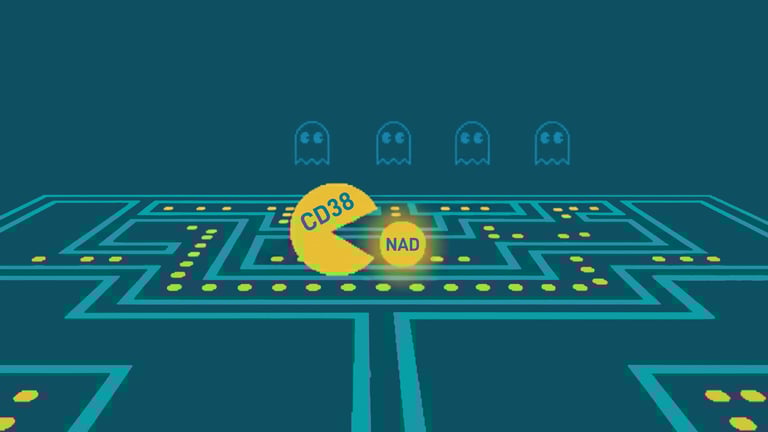
As for our formulation itself, we use an enzymatic process, widely considered a green preparation method, that results in stable, easily absorbed, low-density NMN. Plus, our finished NMN supplement is non-GMO and vegan. And it gets better. Our formula addresses a major enzyme—CD38—that actively breaks down NAD in the body. The older we get, the more our CD38 levels increase and the more our NAD levels decline. Supplements designed to increase NAD without addressing CD38 are missing the bigger picture. Think of it like a leaky bucket—no matter how much water you add (the NAD in this analogy), it’s still draining away (the CD38 doing its thing). That amounts to limited benefits and efficacy.
As Dr. Salzman explains it, the real challenge with NAD supplements isn’t simply boosting NAD. It’s actively slowing down the rate of NAD depletion at the same time, and that means addressing CD38. Unlike other longevity supplements on the market, Wonderfeel Youngr™ does exactly that. We pair our high-quality NMN with a trio of handpicked antioxidants and vitamin D3 that work to shield our cells from oxidative stress and regulate CD38 activity. Our diverse mix—resveratrol, hydroxytyrosol and ergothioneine—effectively safeguards against various types of oxidative stress, increases NAD production by activating sirtuins, and inhibits the expression of CD38 and other NAD consumers. That leaky bucket? Plugging the holes with Wonderfeel Youngr™ effectively solves the problem. All of this, combined with our clinically proven dose (900 mg of NMN per serving), means the utmost efficacy and sustained NAD levels. And isn’t that the point?
The bottom line: Liposomal NMN
Currently, any purported advantages to liposomal NMN are based in theory, not data. Be mindful of that when you’re comparing NMN brands and products. Marketing language is designed to be persuasive and reassuring, but a little digging makes the facts very clear—right now, there are no clinical studies that support the theory that liposomal NMN is effective, let alone safe. In the interest of NMN supplements that deliver on their promise—with the research to back it up—oral capsules are the way to go.
Frequently asked questions
Is liposomal NMN better than NMN?
No. Standard oral NMN is better supported by evidence, and it’s a significant gap. Liposomal NMN lacks the foundational testing—dissolution studies, intestinal uptake measurements, and ADME data—that would prove it has any sort of delivery advantage. Beyond the missing data, the stability problems of liposomal technology make poor performance likely: liposomes are prone to leaking during both storage and digestion, which actively undermines the very bioavailability benefit they’re supposed to provide. Standard oral NMN, by contrast, has multiple independent human trials confirming it reliably raises NAD levels. The evidence isn’t close.
Which form of NMN is best?
Based on current research, oral NMN capsules are the best-supported option. They’re well absorbed and efficiently converted into NAD inside cells. All human clinical trials to date use oral NMN capsules—not liposomal, not sublingual, and not via IV.
What are the disadvantages of liposomal supplements?
– No human trial data: No peer-reviewed clinical studies confirm liposomal NMN is more effective than standard oral NMN.
– Stability issues: Liposomes can leak during storage and digestion, undermining the bioavailability advantage they’re supposed to provide.
– Inconsistent dosing: Variable encapsulation quality makes it hard to know how much active NMN you’re actually getting.
– Added ingredients: Stabilizers and surfactants used in liposomal formulas may affect tolerability.
– Higher cost, unproven benefit: Liposomal NMN typically costs more with no clinical evidence justifying the premium.
– Mechanistic mismatch: NMN is water-soluble, and liposomal delivery is primarily designed for fat-soluble compounds.
Are there risks or side effects of liposomal NMN?
Because liposomal NMN hasn’t been studied in human clinical trials, its safety profile isn’t well established. Oral NMN has been shown to be well tolerated in multiple human studies with no serious adverse effects reported.
Does oral NMN really increase NAD?
Yes. Multiple human clinical trials show that daily oral NMN supplementation significantly increases blood NAD levels. These increases happen reliably and safely without the need for specialized delivery systems.
What is the difference between liposomal NMN and regular NMN?
Regular NMN is taken as a standard oral capsule and absorbed well in the small intestine. Liposomal NMN wraps the same compound in a fat-like bubble that’s designed to protect it through the digestive tract and theoretically improve absorption. The key difference is evidence: Regular NMN has multiple human clinical trials confirming it raises NAD levels effectively. Liposomal NMN has none. The delivery mechanism is different; the proven outcomes are not.
Which is better, NMN or liposomal NAD?
NMN is the better-supported option by a country mile. Liposomal NAD has two issues: NAD itself is a large, unstable molecule that doesn’t cross cell membranes efficiently regardless of delivery method, and the liposomal encapsulation adds theoretical benefit with no human clinical evidence behind it. NMN, taken as a standard oral capsule, bypasses both problems. It’s a smaller, more stable molecule, and it has multiple independent human trials confirming it raises NAD levels inside cells. If the goal is increasing cellular NAD, NMN capsules are the evidence-backed choice.