

Key takeaways
- Menopause is both hormonal and metabolic. Estrogen decline overlaps with age-related NAD decline, which affects mitochondrial function and cellular energy.
- NMN supports NAD production, an essential molecule for mitochondrial health, metabolic flexibility, and vascular function, all of which are affected during menopause.
- Some studies show NMN may improve insulin sensitivity and increase NAD levels, though direct evidence for menopause symptom relief is still limited.
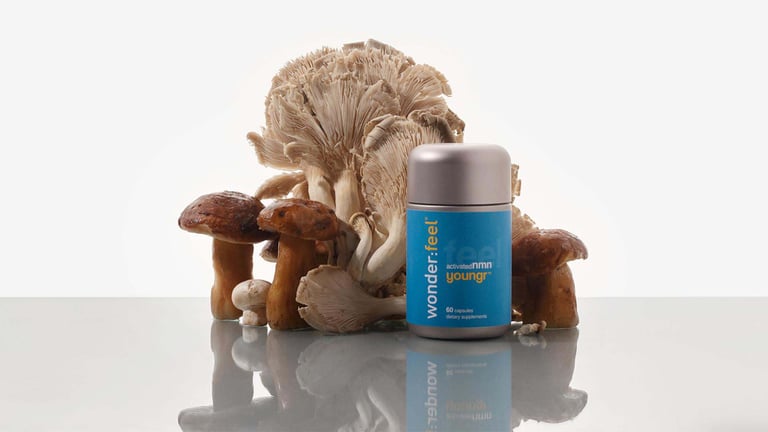
- A clinically relevant dose and a thoughtfully formulated supplement, like Wonderfeel Youngr™, may offer more comprehensive support than NMN alone.
Ask any woman whether hormones rule her life, and the answer is likely yes. From puberty to menstruation to pregnancy to menopause, hormonal fluctuations are simply part of being female. But it’s the last big hormonal shift—menopause—that can feel the most disruptive.
Hot flashes, brain fog, stubborn weight gain, and persistent fatigue are all typical of menopause, but chalking it up entirely to hormones alone misses the bigger picture. At the cellular level, this life change is also an energy transition.

As estrogen declines, cellular energy systems change as well. Levels of NAD (nicotinamide adenine nucleotide), a coenzyme that’s necessary for mitochondrial function and metabolic regulation, naturally decrease with age. Since mitochondria need NAD to generate energy efficiently, it’s an overlap that may help explain why metabolism, cognition, and vascular function tend to feel really different during midlife.
That’s why researchers are increasingly exploring NMN (nicotinamide mononucleotide), a direct NAD precursor. NMN supplementation can help replenish NAD levels, begging the question: can boosting NAD support women during menopause? It’s possible! Here’s what the current science says about NMN for menopause, from metabolism and brain fog to hot flashes and ovarian aging.
Quick answer: Does NMN help with menopause symptoms?
NMN could help support some of the underlying biological changes that take place during menopause, especially those related to declining cellular energy and metabolic function. It’s not a treatment for menopause symptoms, but early research suggests NMN can increase NAD levels, improve insulin sensitivity, and support mitochondrial health. Human studies specifically exploring menopause symptoms are still limited, but NMN is generally considered safe at clinically studied doses and may support midlife cellular resilience.
How menopause affects cellular energy
Menopause marks the permanent end of the menstrual cycle. The clinical definition of menopause is 12 consecutive months without a period. For most women, menopause occurs between the ages of 45 and 55. It’s a reproductive milestone to be sure, but it’s also fair to describe menopause as a much bigger biological shift.
Part of the process is a slow, steady decline in estrogen production. While this hormone regulates ovulation, it also influences metabolism, vascular function, brain signaling, and mitochondrial function. In the cell, mitochondria generate ATP, or the cellular energy currency. Falling estrogen levels, then, have a sweeping downstream effect on the body, and that includes how efficiently cells make and use energy.
At the same time, NAD levels are known to decline with age. That’s why some researchers are studying whether the overlap might amplify changes in energy regulation, insulin sensitivity, and inflammatory signaling. Think of it as two separate processes happening on parallel lines.
NMN for ovarian longevity: What the research says
A woman is born with all of the eggs, or oocytes, she’ll ever have, which means a declining reserve as time passes. Well before menopause— and even before perimenopause, the transitional stage during which hormone levels start to fall and cycles become unpredictable—egg quality likewise declines.

That’s thanks to a combination of DNA damage, an uptick in oxidative stress, and yes, declining mitochondrial function inside the oocyte. It’s all part of reproductive aging. Together, these factors contribute to reduced fertility, an increased risk of chromosomal abnormalities and the slow depletion of ovarian reserve that leads to menopause.
Oocytes are incredibly energy dependent, relying on mitochondria to produce ATP for proper cell division and maturation. For mitochondria to do their job properly, they need sufficient amounts of NAD. But we’ve already learned that NAD levels decline with age, including in ovarian tissue. Some research suggests that replenishing NAD with NMN may help improve oocyte quality and mitochondrial function. In other words, an ovarian environment with more readily available NAD appears to mean energy production functions like it used to.
That has pretty significant fertility implications. In one landmark study, NMN treatment helped produce more healthy eggs and supported cleaner division, both of which are critical for successful fertilization.
Another study suggests that long-term NMN supplementation improved age-related ovarian reserve decline in mice. Researchers gave middle-aged mice NMN for 20 weeks and found impressive increases in the number of follicles during different developmental stages compared to untreated mice of the same age. Essentially, NMN helps specific support cells that nourish and protect developing eggs maintain healthier mitochondria, which supports their energy health. In that way, NMN could contribute to a more supportive environment for oocytes and, by extension, fertility. More research found that short-term NMN supplementation inhibited ovarian atrophy, reduced ovarian inflammation, and restored hormone secretion, which are markers associated with reproductive aging.
An important caveat: all of this research is preclinical, so we can’t yet say with certainty that NMN either delays menopause or preserves fertility in humans. But it’s certainly a promising sign for ovarian longevity.
Can NMN help with “menopause belly”?
“Menopause belly” is just what it sounds like—a tendency for perimenopausal and menopausal women to store more fat in the abdomen. The most frustrating part? It’s not just because they may be eating more or moving less. Instead, it’s largely related to hormonal and metabolic shifts.

Declining estrogen levels often decrease insulin sensitivity, which means the body is less efficient at managing blood sugar. That can promote fat storage, especially of the visceral sort around the midsection. At the same time, age-related changes in mitochondrial efficiency and metabolic flexibility can make it harder for the body to switch from burning carbohydrates to fats for fuel.
Because it’s a direct precursor to NAD, NMN has been studied for its role in supporting metabolic health. In one small study of postmenopausal, prediabetic women, NMN supplementation improved muscle insulin sensitivity. That suggests it could help curb some of these age-related metabolic changes.
For many women struggling with “menopause belly,” understanding that midlife body composition changes aren’t about willpower alone can be incredibly validating. Just remember that NMN isn’t a weight loss supplement, and it certainly won’t replace strength training, nutrition, or sufficient sleep. Still, a high-quality NMN supplement, like Wonderfeel Youngr™, could be a powerful addition to these healthy habits.
Can NMN help with perimenopausal brain fog?
While “menopause belly” is irritating on its own, many women also experience perimenopausal brain fog. It’s like a sudden, noticeable loss of mental sharpness: fumbling for the right word, difficulty concentrating, slower recall, or just feeling mentally slow. While some blame stress or a lack of sleep (another perimenopausal symptom), there’s actually real biology at work here.
Estrogen isn’t just used for reproduction. It also plays an important role in cognitive function, especially in areas like the prefrontal cortex and the hippocampus, which are involved in memory and executive function. Estrogen supports neuron communication, healthy blood flow through brain tissue, the efficient use of glucose for energy, and how effectively mitochondria generate energy in brain cells.
When estrogen levels become less stable and begin to decline, all of these systems are affected. And the brain—which consumes huge amounts of energy—can feel the effects pretty quickly.
Reduced NAD in the brain has likewise been associated with less efficient mitochondria and a bump in oxidative stress, both of which can affect cognitive function. That may explain why men and women alike begin to notice brain fog in their later years.
Again, this is where NMN may make a difference. Supporting healthier NAD levels can help restore cellular energy production, and some research suggests it could support healthier cognitive performance, including in models of Alzheimer’s disease. There’s also anecdotal evidence. We regularly hear from the Wonderfeel community that their ability to focus, concentrate and remember has notably improved with consistently daily use.
Of course, human data that specifically looks at perimenopausal brain fog is still limited. Still, supporting NAD levels could be an effective way to address one of the underlying contributors of brain fog—decliniing cellular energy efficiency in the brain.
NMN and hot flashes: A vascular connection?
Hot flashes are perhaps the most well-known symptom of menopause. Just as the name suggests, a hot flash is a sudden wave of heat that triggers flushing and sweating. Hot flashes can strike at any time, so they’re as unpredictable as they are disruptive. They feel hormonal—and they are—but hot flashes are also vascular.

Here’s the basic mechanism behind a hot flash: Blood vessels near the skin’s surface suddenly widen in what’s known as vasodilation. That’s what creates the sudden sensation of heat and flushing, usually followed by sweating. During perimenopause and menopause, fluctuating estrogen levels affect the hypothalamus, the body’s internal temperature control. Even tiny shifts in core temperature can mean an out-of-proportion vascular response.
Just like everything else in the body, healthy blood vessels need energy to operate smoothly. To regulate circulation, they’re constantly expanding and contracting. That requires cellular energy, which necessitates a steady supply of NAD.
Does that mean NMN can ease hot flashes? At this point, there’s no strong clinical evidence to confirm it. But hot flashes are driven by sudden changes in blood vessel behavior, and supporting stable vascular function could influence the intensity of the response. Since NMN supports NAD production, which is involved in both cellular energy and vascular cell health, there’s reason to be optimistic.
How much NMN should women take during menopause?
There’s no established “menopause dose” for NMN. But most of the human clinical trials to date have used dosages ranging from 250 to 1,200mg. So what makes sense for this particular population?
Keep in mind that many NMN trials aren’t designed specifically around female physiology or menopause. Instead, dosing in these studies usually reflects aging or metabolic research, not hormone-driven outcomes.
The study involving postmenopausal women with prediabetes found that 250mg of NMN daily improved muscle insulin sensitivity. But the largest human clinical trial to date found the biggest impact with a 900mg daily dose. As for safety considerations, human studies have looked at the safety profile of NMN in doses up to 2,000mg per day, with no serious adverse effects reported.
Researchers and longevity scientists are increasingly recommending doses in the 600-1,200mg range, which could be a good starting place for women navigating menopause. Just remember that dosage isn’t the sole consideration. Stability, third-party testing, and whether NMN is paired with complementary compounds that support cellular resilience may matter just as much as the milligram amount alone.
What to look for in an NMN supplement for menopause
NMN supplements vary in dosage, formulation, and quality, and it’s important to shop wisely. Here’s a helpful guide:
- Prioritize purity and stability. NMN is sensitive to heat and moisture, and exposure can mean compromised efficacy. Look for supplements manufactured in cGMP-certified facilities and third-party testing.
- Choose a clinically relevant dose. Most human trials have found the biggest benefits with daily doses between 600 and 1,200mg.
- Look behind “NAD boosting” alone. Some formulations, like Wonderfeel Youngr™, use complementary ingredients designed to replenish NAD and protect at the same time.
In addition to a clinically studied 900mg dose of NMN, Youngr™ is made with a proprietary blend of antioxidants and sirtuin-supporting compounds:
- Ergothioneine, a potent antioxidant dubbed by longevity scientists as a “longevity vitamin.” Ergo accumulates in tissues with the highest oxidative stress, right where protection is needed most. It means smarter, longer-lasting cellular protection compared to typical antioxidants.
- Hydroxytyrosol, a highly bioavailable antioxidant known for supporting cellular defense and inflammatory balance. In a formula like this, hydroxytyrosol helps reduce CD38 production at the source. That means it fights oxidative stress and protects NAD at the same time.
- Resveratrol, a polyphenol supporting healthy aging pathways. It’s a powerful sirtuin activator, enzymes that depend on NAD to do their longevity-promoting work. Think of it as the gas pedal to NMN’s fuel: NMN supports NAD, and resveratrol activates the enzymes that put it to work. Together, the compounds support meaningfully higher NAD levels that either does alone.
- Vitamin D3, which goes well beyond bone health to immune support and healthier aging.
It’s an approach described by longevity researcher Dr. Eric Verdin as “plugging the leaks” rather than simply “filling the tub.” Instead of focusing solely on increasing NAD levels, Youngr™ also works to protect the NAD your cells produce, including by targeting the CD38 pathways responsible for much of its decline:
For women navigating midlife, this kind of thoughtfully formulated NMN supplement could offer a more comprehensive approach than NMN alone.

Bottom line on NMN for menopause
NMN isn’t a cure for menopause. But women interested in supporting mitochondrial health, metabolic function, and cellular energy during this life change should know that NMN is being actively studied for potential benefits. What’s more, early research is promising.
Human studies to date have found NMN to be well tolerated at clinically studied doses, with no serious adverse effects reports. While it’s always wise to check with your doctor before starting a new supplement, especially if you have an underlying medical condition or you’re currently taking prescription medications, current research suggests that NMN appears safe.
For women seeking a thoughtful, science-driven approach to cellular resilience during midlife, high-quality formulations such as Wonderfeel Youngr™ are designed to support NAD biology in a comprehensive way. Consider it part of a broader strategy for healthy aging—and meaningful support as your body navigates one of its biggest changes.
Frequently asked questions
Can NMN help with menopause?
NMN isn’t a treatment for menopause, but it could support some of the underlying biological changes that occur during this life stage. NMN can increase NAD levels, which improves insulin sensitivity and supports mitochondrial function. Since menopause overlaps with age-related declines in energy and metabolism, NMN could mean more midlife resilience.
How much NMN should a 50 year old woman take?
There’s no established “menopause dose” for NMN, but most human studies have shown the biggest benefits from daily doses between 600 and 1,200mg. Wonderfeel Youngr™ uses a clinically studied dose of 900mg along with complementary antioxidants for a comprehensive approach.
Can NMN help with menopause weight gain?
It’s possible. Menopause-related weight gain is often linked to declining estrogen and reduced insulin sensitivity. NMN has been shown to improve muscle insulin sensitivity in postmenopausal women, which could support healthier glucose metabolism. Still, NMN isn’t a weight-loss supplement, and it won’t replace nutrition, strength training, or sleep for women in midlife.
How long does it take for NMN to work for menopause brain fog?
Human studies show that NMN can raise NAD levels within weeks, but there are no large clinical trials specifically examining its effect on perimenopausal brain fog. Some individuals report improvements in energy and focus within several weeks, though responses vary. Because research on menopause-specific cognitive outcomes is still developing, expectations should remain realistic.
Does NMN increase estrogen levels?
No, NMN doesn’t increase estrogen levels. NMN supports NAD, a molecule involved in cellular energy production and metabolic processes. Any potential benefits during menopause are related to cellular energy support, not hormonal replacement.
Is NMN good for females?
NMN supports cellular energy, metabolism, and mitochondrial function in both men and women, but some of the most exciting research is specific to women. Preclinical studies show NMN may improve oocyte quality, fertilization rates, and ovarian reserve—and human fertility trials, including a large-scale study Wonderfeel is involved in at Yale University, are now underway. For women navigating fertility concerns or the cellular shifts of midlife, the evidence is building in a meaningful direction.
Does NMN cause hot flashes?
There is no evidence that NMN causes hot flashes. NMN supports cellular energy metabolism, but it doesn’t directly influence estrogen levels. Because hot flashes are primarily driven by hormonal and thermoregulatory changes, there’s no evidence that NMN triggers them.
I definitely have more energy. I noticed a difference within days of taking it. I had tried everything for more energy since hitting menopause. I am sleeping better as well. Not waking up during the night. It feels amazing not to be tired during the day. My nails are actually growing…it’s still a process, but they’re not chipping and breaking like they used to. It’s only been 1 1/2 months since starting. I have it on autoship and at this time, don’t want to be without it.
Joanne
I’ve been taking this supplement for a few months now, and I love the way it makes me feel. I feel energized, and I’m sleeping consistently. I’m noticing less joint pain and inflammation, which has been something I’ve had to navigate in mid-life and during perimenopause. Thanks for making a high-quality and reliable product that can improve day-to-day life so we can all thrive as we grow older!
Tina