

Key takeaways
- NAD is vital for cellular energy, but taking NAD directly doesn’t reliably raise levels inside cells.
- NAD precursors like NMN are more effective, because they’re absorbed and converted into NAD where it’s needed.
- Oral NAD supplements are unstable and poorly absorbed, limiting their effectiveness.
- NMN alone is sufficient—taking NAD and NMN together is generally unnecessary.
- Lifestyle habits support NAD modestly, but supplementation is the most reliable way to increase levels.
With beauty websites calling it a “wonder supplement,” NAD, or nicotinamide adenine dinucleotide, as it’s formally known, has truly arrived. While this little cellular energy generator has long been recognized in the scientific community for its pivotal role in every single cell in our bodies, the buzz about the many benefits of boosting NAD levels is hitting the streets. And that means a little clarification is in order, particularly about the best way to supplement effectively: Is it better to take NAD directly, or to take a precursor like NMN or NR?
Quick answer
NAD is essential for cellular energy and healthy aging, but taking NAD directly doesn’t reliably increase cellular NAD levels. Research shows that NAD precursors—especially NMN—are more effective, because they’re absorbed, transported into cells, and converted into NAD where it’s actually needed.
Getting to know NAD: Benefits and dosage
Word has clearly gotten out because, in an interesting shift, people are increasingly asking how best to supplement NAD, instead of what it is or what it does. That’s a great sign! It means people have already learned that higher levels of NAD translate to more cellular energy, ensuring cells are primed and able to do their various important jobs. People who are actively searching how best to supplement NAD may also be aware that NAD levels naturally decline as we age, leaving us with roughly half the NAD we had at age 20 by the time we hit 50. As production slows and as aging or damaged cells burn through our precious NAD supply, so comes the onset of conditions traditionally associated with aging—things like a fuzzier memory, less energy, more wrinkles, graying hair, slowed recovery times, brain fog, and the list goes on. Boosting NAD can help offset that decline and support cellular energy production and biological processes that are closely linked to healthy aging and healthspan. That makes NAD supplements very valuable indeed. Or are they?
Why taking NAD directly doesn’t work
Although it may seem logical to supplement NAD directly, studies suggest that oral NAD is poorly absorbed and rapidly broken down in the digestive tract. NAD is also heat- and light-sensitive, so it’s tricky to stabilize in supplement form. Even when NAD enters the bloodstream, it doesn’t easily cross cell membranes, which limits its ability to raise intracellular NAD levels—the form that actually supports energy metabolism and cellular repair.
NAD vs NMN: Supplement Comparison
To make the differences between direct NAD supplements and NMN clearer, here’s a side-by-side comparison based on absorption, cellular delivery, stability, and human research.
| Direct NAD+ (Oral) | NMN (Wonderfeel Youngr™) | Why It Matters | |
|---|---|---|---|
| Absorption | Poor; largely broken down during digestion | Well absorbed in the gut | Determines how much actually reaches circulation |
| Cellular entry | Limited; NAD is too large to easily cross cellular membranes | Efficient; transported into cells via a dedicated pathway | NAD is only effective for energy and repair in the cell |
| Conversion to NAD | Inefficient; degrades before meaningful conversion | Direct precursor; converts to NAD in the cell | Faster, more reliable NAD replenishment |
| Intracellular NAD increase | Minimal and inconsistent | Consistent increases shown in human studies | Cellular NAD is the biologically active form |
| Stability | Sensitive to heat and light | Highly stable in capsule form | Impacts shelf life, potency, and efficacy |
| Human Research (as of 2026) | Limited data on oral supplementation | Growing body of human clinical research | Supports safety and efficacy confidence |
| Safety Profile | Generally well tolerated, but poorly studied | Well tolerated in studied doses | Long-term use requires strong safety data |
| Overall Efficacy | Low for raising cellular NAD | High for supporting NAD levels | Efficacy determines supplement value |
What is an NAD precursor?
An NAD precursor is a compound the body converts into NAD inside cells, helping raise intracellular NAD levels more effectively than taking NAD directly. If you’re researching NAD supplements or even taking one already, surprise – you’re probably not actually taking NAD directly. And that’s a good thing.
What about IV therapy?
IV therapy is often touted as an ideal route of administration in terms of bioavailability for many nutrients, but we just don’t know about its efficacy for NAD. Before NAD IV therapy can be enthusiastically recommended, large and well-designed clinical studies are warranted. Read our post The Real Deal with NAD IV Therapy: Does it Work? for a look at the research to date.
It’s a similar story with NAD injections. They can temporarily raise circulating NAD levels, but there’s no research that shows it makes it into the cells. For sustained cellular NAD support, oral supplementation with an NAD precursor has more supporting evidence.
What you’re likely taking is an NAD precursor, what Dr. Andrew Salzman, a leading biomedical expert, describes as one of the biggest breakthroughs in longevity science: “The real breakthrough that’s occurred is how to get NAD levels back to normal. We now understand that it can’t be done by giving NAD itself, but it can be done by supplying the starting material.”
NMN and NR: How the two main NAD precursors compare
NMN and NR are the two most widely studied NAD precursors. Both are designed to support the body’s ability to produce NAD inside cells, where it plays a role in energy metabolism and cellular repair.
While the two compounds enter the NAD pathway differently, both serve the same goal: restoring declining NAD levels with age. Differences in absorption, conversion, and efficiency are important—but they’re best explored in detail on their own.
NMN and NAD: Can and should they be taken together?
In most cases, no. In the interest of efficacy, supplementing with both NMN and NAD together is excessive. As a hardworking precursor to NAD, an NMN supplement—taken at a proven clinical dose—is sufficient all on its own. It sidesteps the pesky problems of trying to take NAD directly, which, as we’ve covered, is both temperature sensitive and far too efficiently metabolized, rendering the benefits moot.
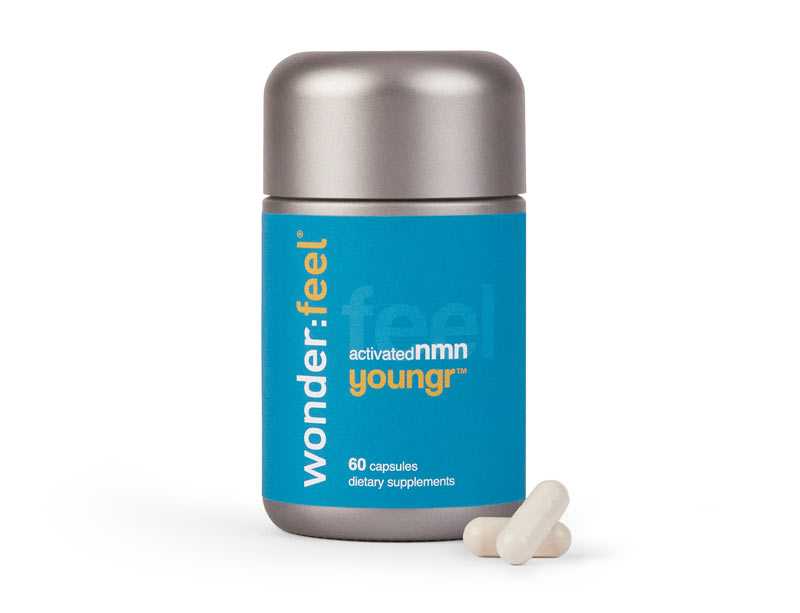
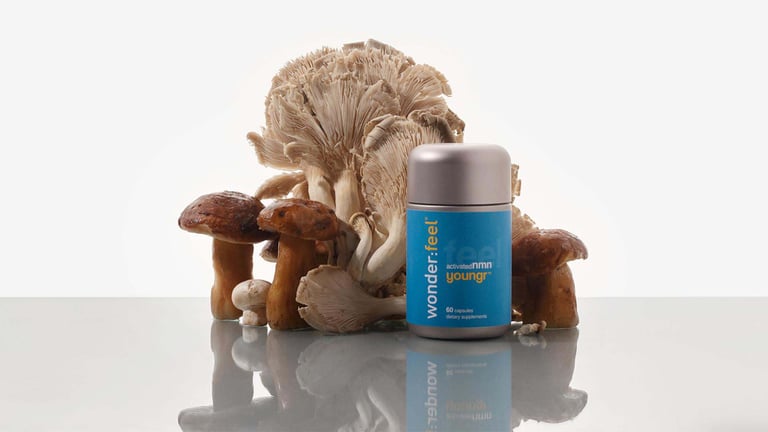
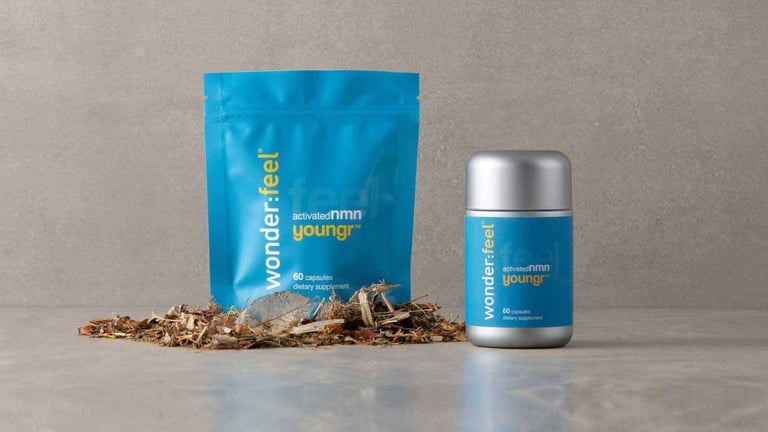
Supplementing with an NMN capsule like Wonderfeel Youngr™, closely mimics what the body does naturally. Instead of a huge wallop every now and then, you consistently benefit from the most efficient dose for a sustained approach to healthy aging.
There’s another advantage to a supplement like Youngr, and we’ll let Dr. Salzman explain. “By itself, NMN is very helpful. But the ability of NMN and NAD to be effective in the cell is dependent on having low oxidant stress.” And that’s exactly why the Youngr™ formula pairs NMN with key antioxidants. Their role is to shield the cell from oxidant stress so that it can more efficiently use the NMN that’s simultaneously being delivered.
And these aren’t any old antioxidants. “The selection of antioxidants in the Wonderfeel capsule is based on the understanding that there are different types of oxidant stress within the cell,” says Dr. Salzman. “By choosing the right components of olive oil and mushrooms and grapes, we’re able to create a capsule that contains all the most powerful antioxidants without the need to take voluminous amounts of the botanical material.”
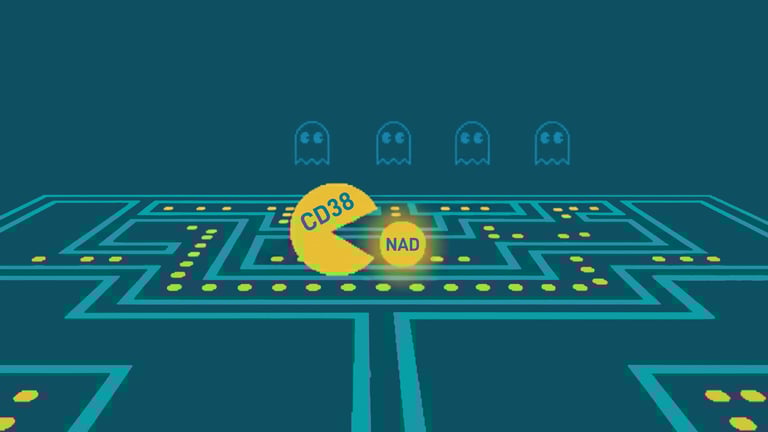
That’s not all. Two of those antioxidants—resveratrol and hydroxytyrosol—also inhibit the activity of an NAD-consuming protein called CD38. And that’s a big deal.
Why preserving NAD matters (not just making more)
Raising NAD levels isn’t only about increasing production. As we age, the body also becomes more efficient at breaking NAD down. One of the reasons researchers pay close attention to this balance is that NAD availability inside the cell depends on both supply and demand.
This has led to increased interest in approaches that not only support NAD production, but also help protect newly generated NAD from being used up too quickly—a concept that’s becoming increasingly important in longevity research.
Related reading: Why CD38 Is Wrecking Your NAD Supply—And What to Do About It
What NAD supplements can—and can’t—do
NAD precursors can support cellular energy and metabolic health over time, but they can’t replace healthy lifestyle habits or produce immediate anti-aging effects. Their effects tend to be gradual and cumulative, which is why NAD precursors work best as part of a broader longevity strategy that includes sleep, nutrition, movement, and metabolic health—not as a standalone solution.
Boosting NAD levels naturally: Tips and recommendations
While there’s little sense in taking both NAD and NMN supplements together, there are ways to increase NAD levels in the body naturally—but before you get too excited, be very clear that any gains here are minimal. They’ll likely be familiar, too. As it happens, leading a healthy, active lifestyle is a simple way to modestly increase NAD production. Of course, the pillars of a healthy lifestyle have been constant for years—regular exercise and a mindful diet, of course—but there are a few bonus activities that might be worth exploring.
Regular exercise isn’t just important for strong bones and muscles (not to mention mindset). Humans very quickly adapt to their normal state. When we lead a largely sedentary lifestyle, the thought of movement can seem overwhelming. When we’re making regular time for physical activity, on the other hand, the more energy we have, the more we crave movement—and the more NAD we produce to power us through. It’s a lovely little cycle!
Then there’s what you eat. NAD is actually found in fermented foods like sauerkraut, kombucha and kimchi. It’s also in smaller quantities in yogurt and kefir. Other NAD-boosting food recommendations include things like avocados, fish, cow’s milk, dark leafy greens, eggs, whole grains and peanuts. Pair a B-vitamin rich diet with an NMN supplement with our own Youngr™ to actively support NAD production. As a bonus, you might also consider exploring intermittent fasting—according to multiple studies, it may have a significant effect on aging and lifespan—or the keto diet, which preaches a high fat/low carb/moderate protein model. It’s intended to put the body into a healthier metabolic state, and increased NAD production is a side effect.
Finally, there’s the fact that things that raise your body temperature, including infrared saunas and hot tubs, can also mean an uptick in NAD. It’s similar to the effect of exercise—it stimulates the body’s metabolic rate and increases energy demands, which is a signal to up NAD production. Whether you’re exercising hard or just sweating passively in an infrared sauna, your body has to work a little harder to maintain homeostasis, and it needs a little more NAD for the job.
To be clear, while movement and nutrition—and perhaps even infrared sauna sessions—are important for a healthy body and mind, their impact on NAD production is pint-sized bordering on minuscule. In other words, don’t hit the gym because you think it’s going to move the needle on NAD. For measurable increases in that department, supplementation is the way to go.
The bottom line
The idea of NAD supplementation is catching on, and that’s a good thing. But supplementing with NAD precursors – not NAD directly – is the most effective way of raising NAD levels for the biggest effect. And you can get started right this way.
Frequently asked questions
Which is better, NAD or NMN?
For raising NAD levels inside cells, NMN is the more effective option. Taking NAD directly does not reliably increase intracellular NAD, while NMN is designed to be absorbed and converted into NAD where it’s actually needed.
Do I need to take NAD if I’m taking NMN?
No. Taking NAD in addition to NMN is generally unnecessary. NMN already serves as a direct precursor that cells convert into NAD, making separate NAD supplementation redundant for most people.
Does NMN increase NAD?
Yes. NMN has been shown to raise NAD levels by supplying the building blocks cells use to produce NAD internally. This is why NMN is commonly used as a strategy to support age-related declines in NAD.
How long does it take for NMN to convert to NAD?
Once absorbed, NMN converts to NAD relatively quickly at the cellular level, but the timing of noticeable effects varies. In human studies, measurable increases in NAD have been observed within weeks, while subjective benefits may take longer depending on individual factors.
Which NAD supplement is best in 2026?
For most people, NMN is the best option for supporting NAD levels, because it’s well absorbed, efficiently converted into NAD, and supported by growing human research. Direct NAD supplements are less effective due to poor stability and limited cellular uptake.