
Key takeaways
- Andrew Huberman follows a highly personalized supplement protocol designed to support energy, hormone balance, sleep quality, and cognitive performance—not a one-size-fits-all regimen.
- He regularly emphasizes that supplements are meant to support, not replace, foundational health habits like sleep, exercise, nutrition, and stress management.
- Many supplements Huberman uses—such as NMN, magnesium threonate, omega-3s, and creatine—have growing scientific support, while others remain experimental and should be approached cautiously.
- Huberman routinely monitors his health with blood work and advises others to consult a healthcare professional before starting or changing a supplement routine.
- NMN plays a central role in Huberman’s energy protocol, aligning with emerging longevity science around NAD decline and cellular aging.
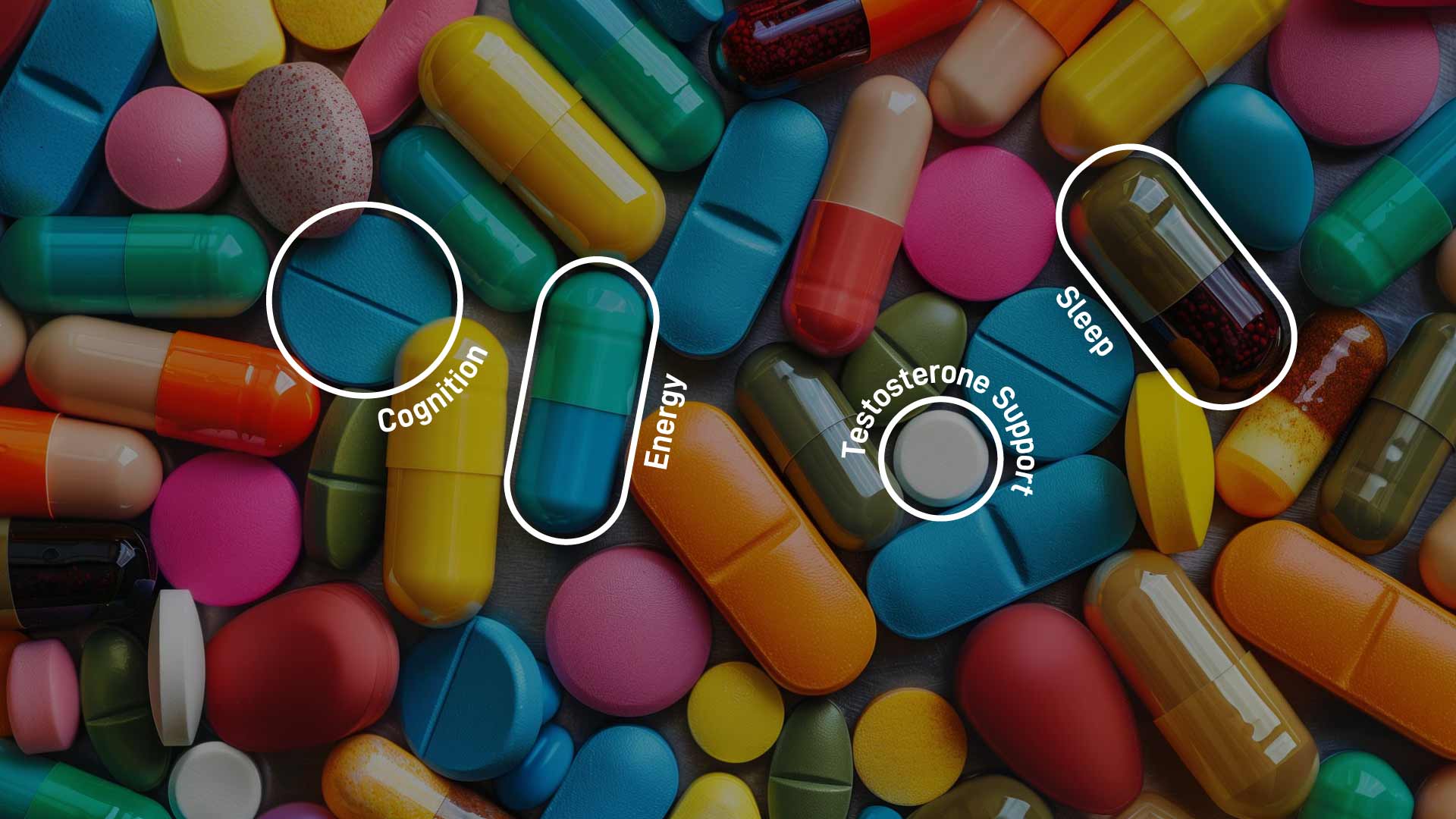
Andrew Huberman is an American neuroscientist and podcaster known for his data-driven protocols intended to help people lead healthier, more optimized lives. So, what about his own protocol? We did some digging to learn more about Andrew Huberman’s supplements and what he’s personally taking to support energy, focus, sleep, and overall health.
From foundational fitness and cold plunging to nutrition and longevity, Huberman is best known for turning complex science into actionable protocols. And unlike many experts, he’s unusually transparent about what he actually takes himself. Below, we break down the supplements Andrew Huberman has discussed publicly, why he uses them, and how they fit into his broader approach to health.
Andrew Huberman’s supplement stack at a glance
| Supplement | Purpose | Huberman Takes It |
|---|---|---|
| NMN | Cellular energy (NAD support), sustained mental & physical energy | Morning, typically before breakfast |
| NR | Cellular energy (NAD precursor) | Morning, alongside NMN |
| Omega-3 Fatty Acids (Fish Oil) | Brain health, mood support, cognitive function | Daily, with meals |
| Creatine | Cognitive endurance, neuromuscular support | Daily (often ~5 g) |
| Magnesium Threonate | Nervous system regulation, sleep quality | Evening, 30–60 min before bed |
| L-Theanine | Calm focus, stress modulation | Evening or as needed |
| Apigenin | Relaxation, sleep onset support | Evening, before bed |
| Myo-Inositol | Sleep onset, nighttime awakenings | Every other night |
| Glycine | Sleep support (occasional use) | As needed, not nightly |
| GABA | Nervous system calming (limited evidence) | Occasional use only |
| Tongkat Ali | Testosterone support, energy | Morning; cycled or monitored |
| Fadogia agrestis | Experimental testosterone support | Cycled; monitored with blood work |
| Zinc | Hormone support, immune function | Morning, with food |
| Boron | Hormone metabolism support | Daily, low dose |
| Vitamin D3 (+ K2) | Immune health, bone health, hormone support | Morning |
| AG1 (Athletic Greens) | Micronutrient coverage, gut support | Every morning |
| Grape Seed Extract | Vascular support, blood flow, cardiovascular health | Daily or as part of general supplementation |
Huberman emphasizes that supplements support—but don’t replace—sleep, exercise, nutrition, and medical guidance. He routinely monitors blood markers and advises consulting a healthcare professional before starting or changing supplements.
Andrew Huberman’s supplements of choice
Andrew Huberman spends a lot of time discussing supplements and is upfront about his belief that diet alone isn’t enough to meet nutrient demands across the board. A quick look at his podcast shows some really interesting episodes, with topics like how to build a supplementation protocol, the lowdown on longevity drugs and supplements, and what to take for things like mental health and well-being, focus and productivity, or even just to relax and get a better night’s sleep.
Huberman himself takes supplements for energy and testosterone support, to promote relaxation and rest, and to maintain focus. What’s more, he has previously partnered with specific supplement brands, throwing the weight of his endorsement behind their products.
As for what he personally takes, he’s on the record as saying he takes no fewer than 15 supplements almost every day for various benefits. Let’s take a closer look.
Andrew Huberman’s supplements for energy
NMN: 1-2 g and NR: 500 mg
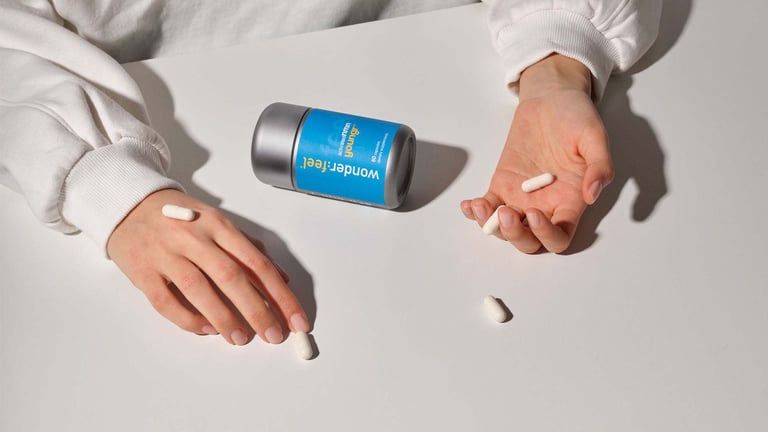
Here at Wonderfeel, we know and love nicotinamide mononucleotide (NMN) and nicotinamide riboside (NR) for their laundry list of benefits, starting with the strong defense they mount against biological aging at a cellular level. A happy side effect of our own Wonderfeel Youngr™ NMN is increased energy. And it’s for that reason that Andrew Huberman appears to be an NMN fan.
He clarifies that he takes both NMN and NR, the most popular NAD precursors, every day not for longevity but to enjoy more sustained energy, both physically and mentally. He adds that he normally takes both supplements within an hour or two of waking up and anywhere from 30 minutes to two hours before breakfast.

Andrew Huberman’s supplements for testosterone support
Tongkat Ali: 400 mg
Tongkat ali, also known as Eurycoma longifolia or Malaysian ginseng, is a shrub-like tree found in Southeast Asia. It’s an herbal remedy with antibacterial, antimalarial, antidiabetic, and antipyretic properties and anecdotally, it may also relieve stress and tension, boost energy, enhance physical performance, and support male infertility and low testosterone. Huberman recommends 400 mg of Tongkat ali and says he has been taking it continuously for years. He advises taking it early in the day to avoid messing with your sleep routine, as it has mildly stimulating effects.
Fadogia Agrestis: 400-600 mg, cycled
A shrub native to Nigeria, Fadogia agrestis though it doesn’t have a lot of clinical evidence to support the claims made about its ability to increase testosterone levels. A study with rats suggests an aphrodisiac effect and higher testosterone levels, but the jury is still out as to whether those benefits apply to humans, too. According to Huberman, who says he takes 600 milligrams of Fadogia agrestis, it’s important to cycle this supplement, follow dosing recommendations to avoid health risks, and get regular blood tests to monitor its effects.
Zinc: 100 mg
Andrew Huberman is on the record as saying that he regularly takes 100 milligrams of zinc with his morning meal. That’s in addition to a daily multivitamin (which typically includes zinc) just to cover his bases. Zinc is an essential mineral, and studies show that supplementation improves testosterone levels, among other benefits.
Huberman has also emphasized that he monitors his blood work regularly—something that’s especially important when supplementing at higher-than-average doses.
Boron: 2-4 mg
Boron, a non-essential mineral, is another testosterone supporter. Huberman reports that he takes a daily low dose.
Andrew Huberman’s supplements to promote sleep
Huberman’s so-called “Sleep Cocktail And Routine,” AKA his “sleep stack,” is designed to alleviate anxiety and calm overactive brain activity.
Magnesium Threonate: 145 mg
While magnesium is often recommended for sleep, this version is most associated with boosting magnesium levels in the brain, which can promote a sense of calmness and relaxation—exactly what you need to drift off. Studies find that magnesium threonate can improve both sleep quality and daytime functioning in adults who report sleep issues. Huberman says he takes magnesium threonate, apigenin, and theanine 30 to 60 minutes before bedtime, but keep in mind that dosages should be adjusted based on individual needs and tolerance levels.
L-Theanine: 200-400 mg
L-Theanine is a nootropic or cognitive enhancer, but it may help promote relaxing brain activity without drowsiness. It’s not a sedative, which is common with over-the-counter sleep inducers, and it’s largely considered a safe natural sleep aid. Huberman recommends taking between 100 to 200 mg about thirty minutes to an hour before bed, but he has reported that his personal dose is a notch higher.
Apigenin: 50 mg
This flavonoid is found in chamomile—a bedtime favorite. It binds to receptors in the brain that control drowsiness and reduce anxiety. You can also find apigenin in parsley, celery, artichokes, and oregano. Interestingly, dried forms are the most potent source of apigenin. One study found that apigenin in capsule form was likewise more potent, with greater bioavailability.
Myo-inositol: 900 mg
Andrew Huberman says he takes 900 milligrams of myo-inositol every other night to enhance his ability to fall asleep quickly at bedtime and make it easier to fall back asleep if he wakes up in the middle of the night.
Glycine: 2 g (as needed) and GABA: 100 mg (as needed)
Glycine is an amino acid abundantly found in seafood. Some research suggests that it could improve sleep in healthy adults, but more studies are warranted to verify its efficacy. Gamma-aminobutyric, or GABA, is a neurotransmitter. Think of it as a little chemical messenger in the brain. It blocks nervous system signals to slow down brain activity, creating a calming effect that can prime you for sleep.
At this point, however, evidence of sleep benefits is pretty darn limited. Nonetheless, Huberman says he occasionally takes two grams of glycine and 100 milligrams of GABA as part of his sleep stack, but only every third or fourth night.

Andrew Huberman’s supplements for cognitive function
Omega-3 fatty acids: 1-2 g
Andrew Huberman has said more than once that fat is the most important macro for brain health, and he recommends at least 1 gram of omega 3s per day across the board to support cognitive function, mood, and brain health as a whole. He gets his omega 3s via fish oil.
L-Glutamine: 1 g
This essential amino acid is used to make proteins, and there’s some (slight) evidence that it can support immune function and it may also offset sugar cravings. On his podcast, Huberman discusses how glutamine supplementation—anywhere from 1 to 10 grams a day—has been shown to counteract negative effects on cognition caused by oxygen deprivation from things like high altitude and sleep apnea. While Huberman is clear that he takes glutamine himself, he refers to it as a “small dose,” which is likely in the neighborhood of about 1 gram.
Creatine: 5 g
If you see creatine and think bodybuilding, you aren’t alone. It’s universally loved by gym rats, but studies show that it has benefits for other populations, too. Huberman says he takes creatine not to maintain his admittedly impressive physique, but rather for its cognitive effects—and the research backs him up.
If you’re looking to add creatine to your own routine, ChocoCreatin™ delivers four grams of pure creatine monohydrate in a format that makes the daily habit effortless—single-origin cacao, creamy peanut butter, and none of the chalky powder.
Other supplements Andrew Huberman recommends
Vitamin D/K2: 5,000 IU
Most of the people you see walking around are deficient in vitamin D, and supplementing is something we should probably all be doing. We need vitamin D to properly absorb calcium and phosphorus, which is how we build strong teeth and bones. It also has a role in everything from muscle and nerve function to a roaring immune system. Huberman says he takes between 5,000 and 10,000 IU of vitamin D daily.
Athletic Greens (AG1)
This is billed as a one-stop shop, a vitamin-and-mineral packed probiotic beverage that Huberman says he’s been drinking daily since 2012. It’s described as a foundational supplement that supports the immune system, endocrine function, and the gut microbiome thanks to adaptogens and digestive enzymes. However, the lengthy list of included ingredients (there are 75!) doesn’t include a quantity breakdown. They might be included, but dosage could be so minimal as to be ineffective. According to one clinical study, on the other hand, it can be safely consumed by healthy adults with “a potential beneficial impact in their digestive system quality of life.”
Grape Seed Extract
Related to resveratrol, grape seed extract may have a positive influence on blood health and heart rate. Huberman says he supplements with grape seed extract for these vascular benefits, not for longevity.
Should you take Andrew Huberman’s supplements?
Well, no. Just because these are the supplements Andrew Huberman takes doesn’t mean they’re the supplements you need to take. But if you’re navigating low energy, symptoms of low testosterone, having trouble sleeping, and fighting brain fog day in and day out, it’s not a bad idea to research the supplements he takes to tackle these issues.
For those of us who are getting older—and feeling the effects of this process—an NMN supplement like our own Wonderfeel Youngr™ NMN can have a phenomenal impact thanks to its effect on nicotinamide adenine dinucleotide, or NAD. This amazing and essential little cofactor is in every living thing, and production inevitably slows the older we get. It’s simply part of the chronological aging process, and it triggers a domino effect to all sorts of age-related dysfunction best avoided, from cancer to neurodegenerative disease. Helping to restore NAD to more youthful levels with precursors like NMN is proving to be highly beneficial. In fact, NMN is being described as one of the biggest breakthroughs in longevity science. By supplementing with NMN, we’re able to get it into our cells, where it’s used to produce NAD, and higher levels of NAD in the cells effectively block the aging process—it’s really that simple. And, as we’ve covered, Andrew Huberman himself is a fan.
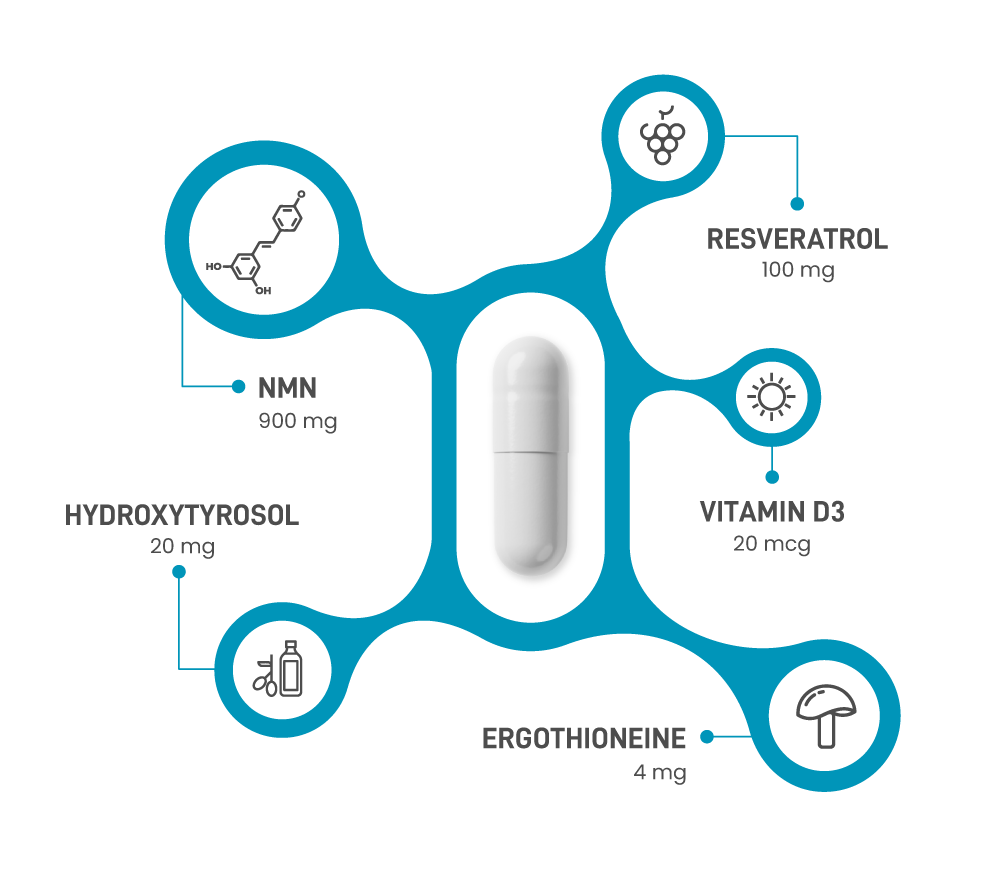
But Wonderfeel Youngr™ goes beyond the benefits of NMN alone. Our proprietary blend includes clinically effective doses not only of NMN, but a select number of antioxidants and sirtuin activators, including ergothioneine, hydroxytyrosol, resveratrol, and vitamin D3, all of which were handpicked for their synergistic abilities.
Ergothionene leads the charge. As a powerful antioxidant, it shields cells from oxidative stress and helps reduce cellular damage. Hydroxytyrosol joins this defensive effort as a robust cell protector, mitigating inflammation and neutralizing harmful oxidative molecules that cause cell damage and accelerate aging. In fact, hydroxytyrosol counteracts hydroxyl radicals that can trigger up to 50,000 DNA breaks per day!
And then there’s resveratrol, which enhances NMN’s impact in two ways: shielding cells against oxidative stress and activating sirtuins. These little proteins depend on NAD to regulate stress responses and improve mitochondrial function. Think of resveratrol as NMN’s wingman, clearing the way for greater efficacy. We round out the formula with vitamin D3 to support immune health.
As Dr. Eric Verdin of the Buck Institute for Research on Aging has noted, the real challenge with NAD supplementation isn’t simply increasing levels—it’s preventing them from being depleted just as quickly. Supplements that focus only on replenishment may fall short if they don’t also address the biological processes that break NAD down.
Why CD38 matters for NAD levels
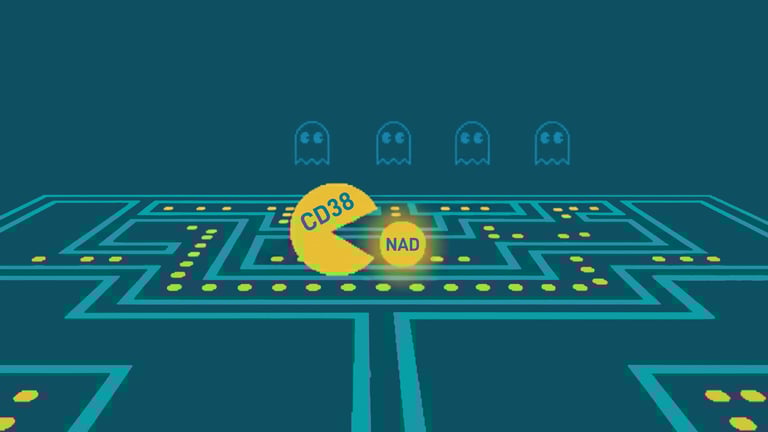
One major reason NAD levels decline with age has little to do with how much you produce—and everything to do with how quickly it’s broken down. A key player in that process is an enzyme called CD38, which actively consumes NAD in the body.
As we age, CD38 activity increases. That means even if you’re supplementing with NAD precursors like NMN, your NAD stores can still be depleted faster than they’re replenished. It’s one reason some NAD-boosting supplements deliver limited or short-lived results on their own. Longevity researchers often describe this as a “leaky bucket” problem: you can keep pouring more NAD into the system, but if breakdown isn’t addressed, levels continue to drop.
That’s where Wonderfeel Youngr™ takes a more comprehensive approach. In addition to NMN, the formula includes targeted antioxidants and sirtuin activators selected to support cellular resilience and reduce oxidative stress—factors known to influence CD38 activity. The goal isn’t just to raise NAD temporarily, but to help sustain healthier levels over time.
The takeaway
Andrew Huberman says a running joke when it comes to the supplements he takes is, “all of them.” But it’s clear that he’s choosy about what he takes and why. While he’s pretty forthcoming about his supplements of choice and dosages, he’s also quick to point out that individual needs vary and he recommends speaking with your physician before starting or ending a supplement.
Keep in mind, this is a guy who gets routine blood work to ensure the supplements he’s taking are benefiting him. He also emphasizes practices that support foundational health—getting plenty of high-quality sleep, regular exercise, a nutritious diet, and meaningful social connections—and we second all of that. But we’ll go ahead and recommend Wonderfeel Youngr™ NMN as a worthy supplement to those of you who are beginning to notice the effects of getting older. As we’ve pointed out, there’s a reason Andrew Huberman takes the supplements he does—and NMN is one of them.
Frequently asked questions
What supplements does Andrew Huberman actually take?
Andrew Huberman recommends supplements based on individual goals and deficiencies. He commonly discusses NMN or NR for energy, omega-3s for brain health, magnesium threonate and L-theanine for sleep, creatine for cognition, and vitamin D for overall health, and he emphasizes personalization and medical guidance.
What supplement company does Huberman use?
Huberman has publicly partnered with and endorsed specific brands over the years, most notably Athletic Greens (AG1). But he routinely says that brand choice matters less than ingredient quality, dosing, and third-party testing.
Does Andrew Huberman take NMN or NR?
Andrew Huberman has publicly said he takes both NMN and NR, two NAD precursors, to support sustained mental and physical energy. He typically takes them in the morning, usually before he eats.
Which omega-3 does Huberman take?
Huberman gets his omega-3s from fish oil, aiming for roughly 1–2 grams daily to support brain health, mood, and cognitive function.
What supplement company does Andrew Huberman endorse?
In addition to Athletic Greens, Huberman has partnered with various supplement brands over time, but he regularly reminds listeners that endorsements do not replace independent research or medical advice.
Does Andrew Huberman use creatine?
Yes. Andrew Huberman has said he takes creatine—around 5 grams per day—not for muscle size, but for its potential cognitive and neuroprotective benefits. If you’re ready to add it to your routine, Wonderfeel’s ChocoCreatin™ is worth a look. With fair-trade cacao, creamy peanut butter, and four grams of pure creatine monohydrate, it’s the kind of supplement you’ll actually look forward to taking.
Does Andrew Huberman take supplements for anxiety?
No, not as treatments. Andrew Huberman doesn’t describe supplements as treatments for anxiety, but he has discussed using magnesium, L-theanine, and apigenin to support relaxation and nervous system regulation. He says that sleep, breathing protocols, and light exposure are more effective than supplements alone.
Does Andrew Huberman take supplements for brain health?
Yes. Andrew Huberman has discussed taking supplements that support brain health, including omega-3 fatty acids, creatine, magnesium threonate, and NAD precursors. He says they’re supportive tools that work best alongside sleep, exercise, and nutrition.
How many supplements does Andrew Huberman take per day?
Andrew Huberman has said he takes at least 15 supplements on most days, but the exact number varies. He cycles certain supplements and regularly monitors his health with blood work.