

Key takeaways
- Joe Rogan hasn’t endorsed a specific supplement stack, but his podcast frequently explores NMN, NAD, and cellular energy through conversations with longevity researchers.
- NMN comes up because it supports the body’s ability to produce NAD, a molecule central to energy metabolism that naturally declines with age.
- Longevity discussions on the podcast consistently emphasize fundamentals like sleep, recovery, nutrition, and consistency—rather than shortcuts or quick fixes.
- Quality, dose, and formulation matter when it comes to NMN, which is why clean labels and research-aligned dosing are recurring themes.
- NMN is framed as a supporting tool within a broader longevity strategy, not a standalone solution or “miracle molecule.”
Joe Rogan’s schedule would challenge someone half his age. Between marathon podcast episodes, mixed martial arts training, lifting heavy, stand-up comedy, and constant travel, he operates at a level of output that makes you wonder: how does he sustain that kind of energy and recovery at nearly 60?
That curiosity has driven millions of listeners down the same rabbit hole—looking beyond workouts and mindset to the supplements and longevity topics that come up on The Joe Rogan Experience. Over the years, those conversations have shifted from basic vitamins to bigger ideas around cellular energy, metabolic health, and long-term performance.
A big part of that discussion centers on NAD, a molecule your cells rely on to produce energy. NAD levels naturally decline with age, which is why researchers—and frequent podcast guest Dr. David Sinclair—have spent so much time talking about ways to support the body’s NAD production. The focus isn’t on shortcuts, but on how energy is made and managed at the cellular level.
Below, we break down the supplements Rogan has talked about, what the science actually says, and where NMN fits into the bigger longevity conversation—clearly, responsibly, and without the hype.
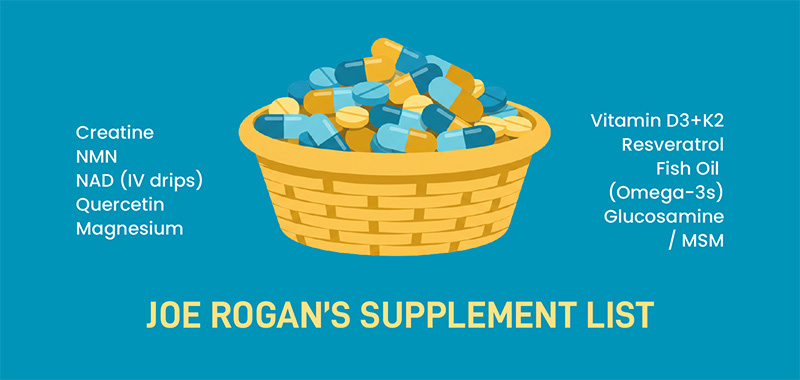
Joe Rogan supplement list: A quick overview
| Supplement | Why It Comes Up on the Podcast | What It’s Generally Used For |
|---|---|---|
| NMN | Often discussed with longevity researchers like Dr. David Sinclair in conversations about aging and cellular energy | Supports NAD production, which plays a key role in cellular energy and metabolism |
| NAD (IV drips) | Talked about in recovery and mental clarity discussions | Short-term NAD delivery; debated long-term benefits |
| Creatine | Frequently mentioned in training and strength-related conversations | Supports strength, power output, and muscle recovery; also studied for aging and brain health |
| Vitamin D3 + K2 | Comes up as a foundational health topic | Supports immune health, bone health, and hormone regulation |
| Fish Oil (Omega-3s) | Regularly discussed in brain and inflammation conversations | Supports heart health, brain function, and inflammation balance |
| Resveratrol | Often mentioned alongside NAD and aging research | Studied for its role in cellular defense pathways |
| Quercetin | Comes up in immune and antioxidant discussions | Supports oxidative stress management and cellular protection |
| Magnesium | Mentioned in sleep and recovery conversations | Supports muscle relaxation, nervous system function, and sleep quality |
| Glucosamine / MSM | Talked about in joint health and long-term training discussions | Supports joint comfort and connective tissue health |
Why NMN is frequently discussed on Joe Rogan’s podcast?
As conversations on The Joe Rogan Experience have shifted from straight-up fitness toward long-term performance and aging well, one topic comes up again and again: cellular energy. That’s where NAD enters the picture.
Rogan himself has described NMN and NAD support in characteristically enthusiastic terms. On one episode, he explained why the topic caught his attention in the first place:
It’s a supplement that helps your telomeres lengthen, which is a sign of healthy bodies and youth. It benefits your immune system and cognition. You just feel fantastic when you’re replenished.
The science behind the interest: NAD decline and aging
NAD (nicotinamide adenine dinucleotide) is a coenzyme found in every cell of the body, and it plays an enormous role in a number of key processes. This humble little molecule supports mitochondrial function, helps regulate metabolism, and activates processes involved in DNA repair. The catch? NAD levels naturally decline with age—starting earlier than most people think.
This framework—often referred to as David Sinclair’s NMN protocol in Joe Rogan podcast discussions—emphasizes consistency, appropriate dosing, and long-term cellular support rather than short-term performance boosts.
NMN comes into the picture because it’s a direct precursor to NAD. In simple terms, your body can convert NMN directly into NAD once it enters the cell. It’s a straightforward relationship, and that’s precisely why NMN is so often mentioned in conversations about aging, performance, and metabolic resilience—especially when the goal is supporting energy at the cellular level, not chasing quick fixes.
NMN vs. NAD IV drips: Consistency vs. convenience
NAD IV drips have also come up on the podcast, usually in conversations about recovery, mental clarity, or feeling run down. An IV delivers NAD straight into the bloodstream, which is why some people report noticeable short-term effects (though whether that actually translates into benefits is still up for debate). Plus, IV therapy tends to be expensive, time-consuming, and something most people do occasionally—not daily.
That’s why oral NAD precursors like NMN are often discussed as a more practical, everyday option. Instead of big, infrequent spikes, a well-formulated NMN supplement is designed to support steady NAD production over time, and that’s closer to how cellular energy systems actually work.
For people thinking long-term—about sustainable energy, recovery, and overall health rather than quick boosts—that kind of consistency is usually the draw. It also explains why NMN often comes up alongside broader habits discussed on the podcast, like sleep quality, training recovery, and metabolic health.
The Huberman connection: NMN in longevity conversations
Neuroscientist Dr. Andrew Huberman, another familiar voice in the Rogan orbit, has also talked about NMN and NAD biology—usually in the context of energy metabolism, aging, and cellular health. True to form, Huberman tends to focus on evidence-based frameworks, emphasizing how supplements fit around the fundamentals rather than replacing them.
In those discussions, NMN is framed less as a standalone solution and more as part of a bigger picture—one that includes things like timing, safety, sleep, stress management, and metabolic health. That added nuance has helped clarify where NMN may make sense, and just as importantly, where it doesn’t.
Taken together, these conversations have positioned NMN not as a miracle shortcut, but as a science-backed tool within a much broader approach to aging well. That context helps explain why NMN keeps coming up on the podcast—and why interest in supporting NAD has expanded well beyond basic supplementation.
The supporting cast: What Joe Rogan often pairs with NMN?
On The Joe Rogan Experience, NMN rarely comes up on its own. It’s usually part of a broader conversation about nutrition and lifestyle—things that support hormones, brain health, inflammation control, and cellular repair. While everyone’s routine looks a little different, a few supporting nutrients tend to show up again and again in longevity and performance discussions on the podcast.
Vitamin D3 + K2: The foundation
Vitamin D plays a key role in hormone regulation, immune health, and metabolism—all of which influence energy and recovery. Because vitamin D affects how the body handles calcium, it’s often paired with vitamin K2, which helps guide calcium where it belongs, like bones, and away from places it doesn’t.
In longevity conversations, D3 and K2 are usually treated as baseline nutrients, not performance enhancers. Without adequate vitamin D levels, many higher-level strategies don’t work as well. That’s why this combo is often described as a foundation—helping create the internal environment where cellular processes, including NAD-related pathways, can function more smoothly.
Joe Rogan has said that he takes roughly 5,000 IU of vitamin D3 daily, which far exceeds the standard recommended dietary allowance.
Fish oil (omega-3s): Brain health and inflammation support
Omega-3 fatty acids, especially EPA and DHA, are another consistent topic when long-term health comes up. They’re well studied for their role in brain function, heart health, and inflammation balance—areas that matter more as training loads increase and we get older.
From a cellular standpoint, chronic inflammation can interfere with recovery and metabolic efficiency. Managing it helps the body use energy more effectively overall. That’s why omega-3s are often mentioned alongside NMN—not as a substitute, but as complementary support for system-wide balance.
Creatine
Creatine also comes up a lot in Joe Rogan’s training conversations, and that’s no accident. It’s one of the most well-studied supplements out there, especially when it comes to strength, power, and recovery. For anyone doing hard training—lifting, kettlebells, or high-intensity work—it’s long been a go-to.
What’s interesting is that creatine is now being talked about beyond just gym performance. Research suggests it may also help support muscle strength and even aspects of brain function as we age. That’s why creatine often shows up as a “base layer” in longevity-focused routines—supporting the physical side of performance, while newer tools like NMN focus more on cellular energy and long-term resilience.
Resveratrol & quercetin: Supporting cellular defense pathways
Compounds like resveratrol and quercetin also come up in conversations around aging and cellular protection. These plant-based polyphenols are often discussed for their role in activating sirtuins—proteins involved in cellular stress response and DNA maintenance.
Resveratrol, in particular, is frequently mentioned alongside NAD because sirtuins rely on NAD to do their job. Quercetin is usually highlighted for its antioxidant properties and its potential role in managing oxidative stress. Together, they’re framed not as magic bullets, but as supporting players in a larger cellular health strategy—one that often includes NAD precursors like NMN.
Physical performance & muscle longevity
Keeping up high-intensity training for decades takes more than strength or conditioning alone. Strength work, kettlebells, Brazilian jiu-jitsu, and conditioning sessions all place ongoing demands on energy production, joint health, and recovery. As conversations on The Joe Rogan Experience have expanded beyond performance into aging well, training is increasingly viewed through that longer-term lens.
NMN, cellular energy, and high-intensity training
Across many episodes, Rogan and his guests have talked about how mitochondrial health and metabolic efficiency influence endurance, recovery, and overall training output—especially as athletes get older. High-intensity efforts like kettlebell complexes or long BJJ rounds don’t just tax muscles; they depend on the body’s ability to convert fuel into usable cellular energy, over and over again.
Because NAD plays a central role in mitochondrial energy production, it often comes up in conversations about maintaining physical capacity with age. NMN, as a precursor to NAD, is frequently discussed in longevity research and podcast conversations as one way scientists are exploring how to support the cellular energy systems demanding training relies on. Instead of being framed as a performance booster, NMN is usually positioned as support for energy metabolism and cellular maintenance—helping sustain training consistency over time.
Joint support: Old-school foundations meet new-school longevity
Longevity-focused performance discussions also acknowledge a simple reality: joints and connective tissue often become limiting factors before muscles do. That’s why traditional joint-support supplements like glucosamine and MSM still come up alongside newer cellular-health strategies.
Often labeled “old school,” these compounds are discussed for their role in supporting cartilage and joint comfort—important for anyone who wants to keep training without frequent interruptions. In Joe Rogan’s podcast conversations, they aren’t treated as outdated, but as foundational tools that complement newer approaches like NMN, which focus on cellular energy rather than structural support.
Together, they represent two sides of sustainable performance: maintaining the physical framework that allows movement, while also supporting the cellular systems that power it.

The Wonderfeel advantage
As interest in NMN has grown, so has an important realization that comes up often in research discussions and on podcasts like The Joe Rogan Experience: not all NMN supplements are created equal. Differences in stability, purity, formulation, and dose can all influence how NMN performs once it’s taken—and whether it delivers the kind of consistency people are actually looking for from a longevity-focused supplement.
For biohackers searching in 2026 for the best NMN supplement, the conversation increasingly centers on purity, stability, and research-aligned dosing—not hype or shortcuts.
Why NMN quality matters: Stability, purity, and dose
NMN is a biologically active compound, which means how it’s made, handled, and stored matters. Exposure to heat, moisture, or low-quality sourcing can compromise stability before the supplement is ever absorbed. That’s why conversations around NMN increasingly focus not just on whether to take it, but on how it’s produced and verified.
Purity matters just as much. High-quality NMN should be independently tested to confirm identity and potency, so what’s on the label matches what’s in the capsule. Without rigorous testing and quality controls, dose consistency can vary—undercutting the cellular processes NMN is meant to support in the first place.
Why dosage matters: Aligning with research-level standards
On The Joe Rogan Experience, Dr. David Sinclair has often talked about the importance of dose when it comes to NAD precursors. In those conversations, amounts around one gram per day are frequently referenced in research contexts—not as a blanket recommendation, but as an example of the levels being studied for potential effectiveness.
Joe Rogan has echoed these discussions on the podcast, helping highlight the idea that dose matters just as much as ingredient choice. Lower-dose formulations may sound appealing, but they don’t always reflect the amounts explored in longevity research or discussed by experts.
In 2026, searches for Joe Rogan NMN dosage often point back to these same podcast discussions, where amounts around one gram per day are mentioned in research contexts—not as personal prescriptions, but as examples of the doses being studied.
Wonderfeel NMN is formulated with research-driven context in mind—aligning with higher-efficacy dosing standards (a 900mg dose in two capsules) while maintaining strict quality controls. The goal is a consistent, daily approach to NAD support, rather than relying on sporadic or underdosed solutions.
The importance of a clean label
For listeners drawn to Joe Rogan’s podcast’s emphasis on thoughtful health optimization, transparency matters. A “clean label” isn’t a buzzword—it reflects a commitment to avoiding unnecessary fillers, opaque blends, and added complexity.
Wonderfeel focuses on clean, straightforward formulations designed to support cellular health without distractions. That kind of clarity aligns naturally with the values often emphasized in longevity and performance conversations, especially for people who care about ingredient sourcing, third-party testing, and manufacturing standards.
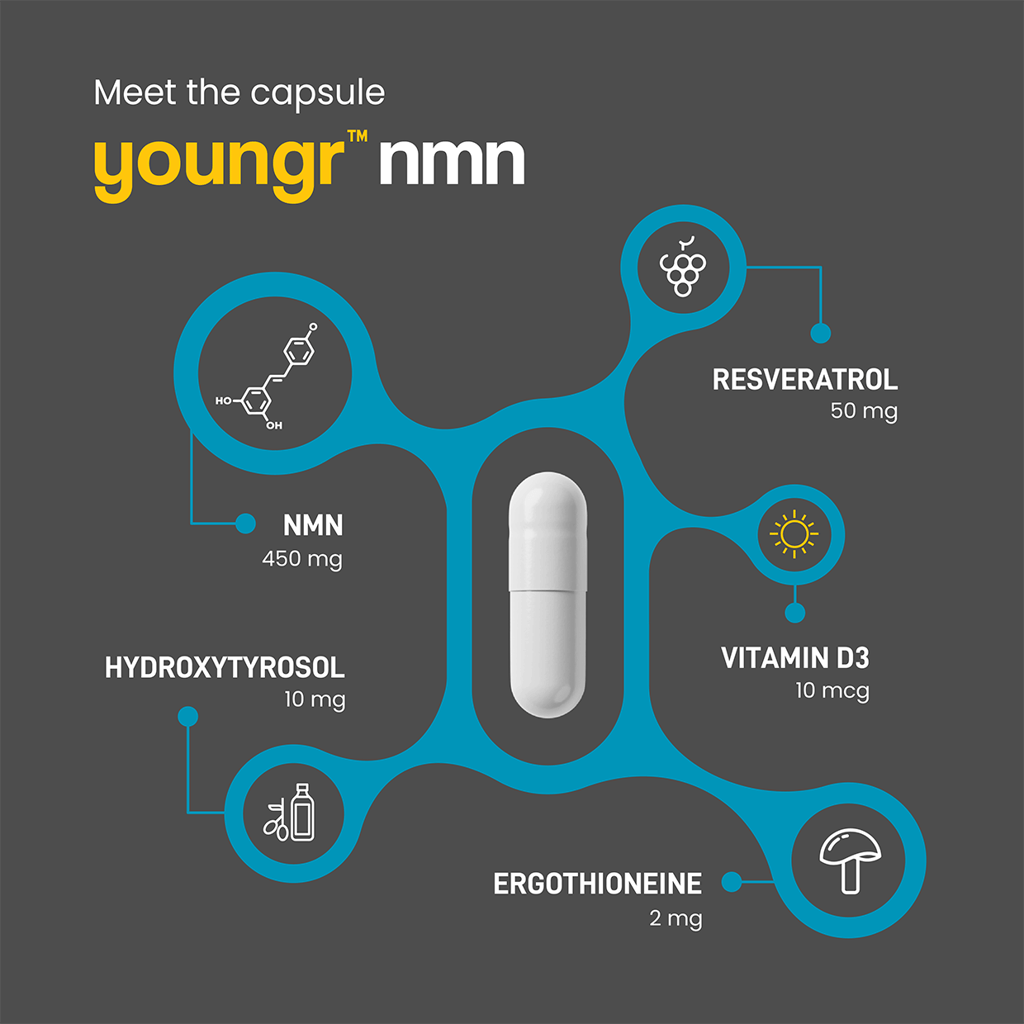
In a category where quality can vary widely, the Wonderfeel advantage comes down to consistency, transparency, and alignment with the science being discussed—not hype, shortcuts, or trend-driven claims.
How to start your own “Rogan-inspired” longevity protocol
The Joe Rogan Experience has helped popularize a performance-first way of thinking about aging—one that prioritizes energy, resilience, and staying physically capable for the long haul. While routines vary widely, many of the longevity conversations on the podcast point to the same idea: start with a strong foundation, then add things thoughtfully.
Step 1: Start with cellular energy support
A lot of longevity discussion on the podcast starts at the cellular level. NAD plays a central role in energy production and metabolic function, and its gradual decline with age comes up often in conversations with researchers and expert guests. NMN, as a precursor to NAD, is frequently discussed in that context for its role in supporting the body’s ability to produce energy efficiently over time.
Importantly, NMN isn’t framed as a quick fix. It’s usually talked about as part of a consistent, long-term approach to cellular health—especially for people focused on maintaining energy, focus, and training capacity as they get older.
Step 2: Add foundational nutrients like vitamin D
Once cellular energy is addressed, the conversation often shifts to baseline nutrient status. Vitamin D comes up repeatedly because of its role in hormone regulation, immune health, and metabolic function. Without adequate vitamin D levels, many higher-level strategies simply don’t work as well.
Vitamin D is often paired with vitamin K2 to support proper calcium use in the body, helping maintain bone and cardiovascular health—both of which matter for long-term performance and training longevity.
Step 3: Fix sleep before adding complexity
Across nearly every longevity-focused discussion on the podcast, one point is consistent: sleep isn’t optional. Poor sleep can undermine energy, recovery, hormone balance, and metabolic health—no matter how dialed in the supplement stack is.
Before adding more layers, improving sleep duration, consistency, and circadian alignment is often described as the biggest lever for sustainable performance and long-term health.

A simple daily framework for NMN timing
Timing also comes up in conversations around NAD support. Because NAD is closely tied to energy metabolism and circadian rhythms, NMN is commonly taken earlier in the day—when cognitive and physical demands are highest.
A simple, commonly discussed framework looks like this:
- Morning: NMN taken earlier in the day, often alongside other morning supplements.
- Daytime: Work, training, and normal energy demands.
- Evening: Focus on recovery habits, light management, and sleep quality.
This kind of approach aligns NMN use with daytime energy needs while helping protect sleep at night—supporting both performance and recovery over time.
What Joe Rogan’s longevity conversations really point to
Interest in Joe Rogan’s supplements isn’t really about copying one person’s routine. It reflects a bigger shift toward performance-informed longevity—an approach focused on maintaining energy, resilience, and physical capability over time, not chasing quick fixes.
Across years of Rogan’s podcast conversations, the same themes come up again and again: cellular energy, metabolic health, recovery, and consistency. NMN has become part of that discussion not because it’s treated as a shortcut, but because it sits at the intersection of emerging longevity research and practical, day-to-day support for the body’s energy systems.
When framed responsibly, NMN fits into a much bigger picture—one that includes foundational nutrients, disciplined recovery habits, and quality standards that matter as much as the ingredient itself. Longevity, as these conversations often reinforce, isn’t built on a single supplement. It’s built on informed choices, consistency, and staying aligned with the science over time. For those who choose to incorporate NMN thoughtfully, Wonderfeel focuses on purity, stability, and research-aligned dosing, all grounded in quality and consistency.
Frequently asked questions
Has Joe Rogan ever said what brand of NMN he uses?
No. Joe Rogan has talked about NMN and NAD biology on his podcast, especially in conversations with researchers like Dr. David Sinclair, but he hasn’t mentioned a specific NMN brand he uses. Most discussions focus on the science and broader longevity concepts, not personal supplement brands.
Why does Joe Rogan take NMN instead of NR?
Rogan hasn’t directly said he takes NMN instead of NR, but NMN tends to come up a lot on his podcast because researchers often describe it as a direct precursor to NAD. That means it can be efficiently converted into NAD inside the cell.
How much NMN does Joe Rogan take daily for anti-aging?
Joe Rogan hasn’t talked about his personal NMN dosage. But discussions on the podcast—particularly with Dr. David Sinclair—have mentioned doses around one gram per day in research settings. Just note that these amounts are discussed as part of scientific exploration, not as universal recommendations.
Is oral NMN as effective as Joe Rogan’s NAD IV drips?
NAD IV drips and oral NMN serve different purposes. IV drips deliver NAD directly into the bloodstream and may produce noticeable short-term effects (though actual benefits are still up for debate), but they’re expensive, time-intensive, and used occasionally. Oral NMN is discussed as a more practical, daily approach that supports consistent NAD production over time instead of big, infrequent spikes.
Did Andrew Huberman and Joe Rogan discuss NMN safety?
Yes. When Joe Rogan and Andrew Huberman talk about NMN, safety and context are part of the conversation. Huberman usually stresses sticking to evidence and not treating supplements as shortcuts, while Rogan tends to ground the discussion in real-world use. The takeaway is pretty much the same: NMN is discussed alongside basics like sleep, nutrition, stress management, and recovery—not as a standalone solution.
How does NMN fit into Joe Rogan’s TRT and fitness regimen?
Joe Rogan has talked openly about TRT and high-intensity training, but NMN isn’t presented as part of a specific hormone protocol. When it comes up on the podcast, it’s usually talked about in broader terms—as support for cellular energy and metabolic health, which can be relevant no matter how you train or whether you’re on TRT.
Why is NMN considered the “miracle molecule” on the Rogan podcast?
The phrase usually comes from excitement around new longevity research. On the podcast, NMN is generally talked about more carefully—as something researchers are interested in, not a guaranteed fix. Most guests still come back to the basics: sleep, recovery, nutrition, and consistency, with NMN playing a supporting role rather than stealing the spotlight.
How much creatine does Joe Rogan take a day?
Joe Rogan hasn’t publicly shared an exact daily creatine dose. But in general training and performance discussions—including those that come up on his podcast—creatine is commonly taken in the range of 3–5 grams per day.