
Key takeaways
- NMN is the “fuel”—it raises NAD levels, which power energy production, DNA repair, and cellular stress defenses.
- Resveratrol is the “accelerator”—it activates sirtuins, but only when NAD levels are high enough to support their activity.
- NMN has stronger and more consistent human evidence, while resveratrol’s benefits are promising but more variable due to bioavailability challenges.
- Using both together may amplify results, since NMN boosts NAD while resveratrol supports sirtuin activity.
- Our bodies naturally make NMN, but resveratrol is a beneficial polyphenol that we source from food.
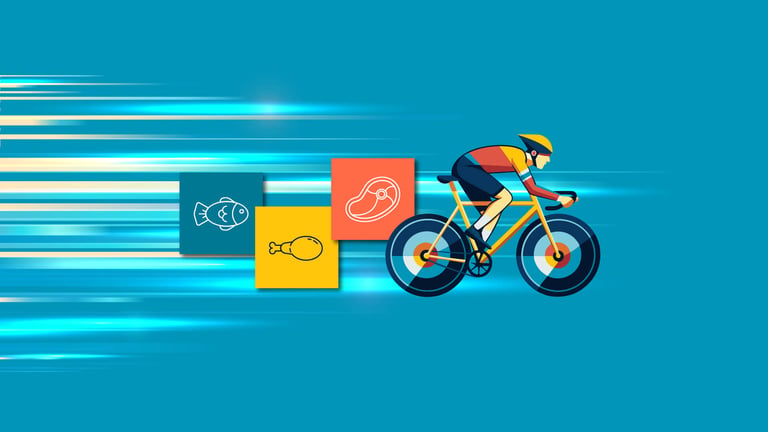
NMN and resveratrol come up regularly in longevity circles, for good reason. Both have been linked to healthier aging, better cellular function, and a zippier metabolism. But they impart these benefits in their own ways. Here’s a handy visual: Think of NMN as the fuel that helps your body bump up NAD, the essential molecule powering key processes in the body. Resveratrol is kind of like the accelerator, firing up sirtuins, which are proteins widely known as the body’s longevity regulators. Here’s the catch—sirtuins can only function when there’s enough NAD on hand.
Clearly, NMN and resveratrol are connected—which is why they’re so often compared, debated, and paired. But it brings up an important question: When it comes to NMN and resveratrol, which one actually has stronger scientific evidence behind it? Below, we’re taking a closer look at how each compound works, what current research really shows, and whether taking them together delivers more meaningful benefits than choosing one alone.
What is NMN, and how does it work?
NMN, or nicotinamide mononucleotide, is a naturally occurring molecule that our bodies use to create NAD, or nicotinamide adenine dinucleotide. Dr. Andrew Salzman, a renowned Harvard Medical School alumnus and the chief medical officer here at Wonderfeel, isn’t exaggerating when he describes NAD as “the centerpiece of biology.” It’s directly involved in literally hundreds of cellular processes, and most notably energy production, DNA repair, and antioxidant defense.
As we age, NAD levels naturally and steadily decline. It’s a drop linked to things like lower energy levels, weakened repair systems, and slower cellular function overall—all of which are largely chalked up to the process of getting older. This is where NMN comes in.
NMN is an NAD precursor, which is why calling it the fuel for producing more NAD is so apt. NMN actually has its very own shuttle, known as Slc12a8, that ushers it straight into the cell, where it converts directly into NAD. It’s all very tidy and efficient, and there are very clear benefits to boosting NAD levels with NMN supplementation.
- Energy production. NAD directly controls the production of ATP, our cellular energy currency. Low NAD? Low energy. And that affects everything from movement to metabolism to cognitive performance.
- DNA repair. Your cells experience dozens of tiny DNA breaks every minute, and repair enzymes like PARP need NAD to fix them and prevent mutations.
- Antioxidant defense. Living in an oxygen-rich world means our bodies are fending off ongoing environmental attacks. NAD helps maintain the systems that produce NADPH, one of the body’s most important antioxidant molecules.
This direct relationship—NMN to NAD to healthier cellular activity—is one reason NMN has become one of the most researched compounds in the longevity world. It doesn’t just influence one pathway. It feeds the molecule at the center of many of them.

What is resveratrol, and how does it work?
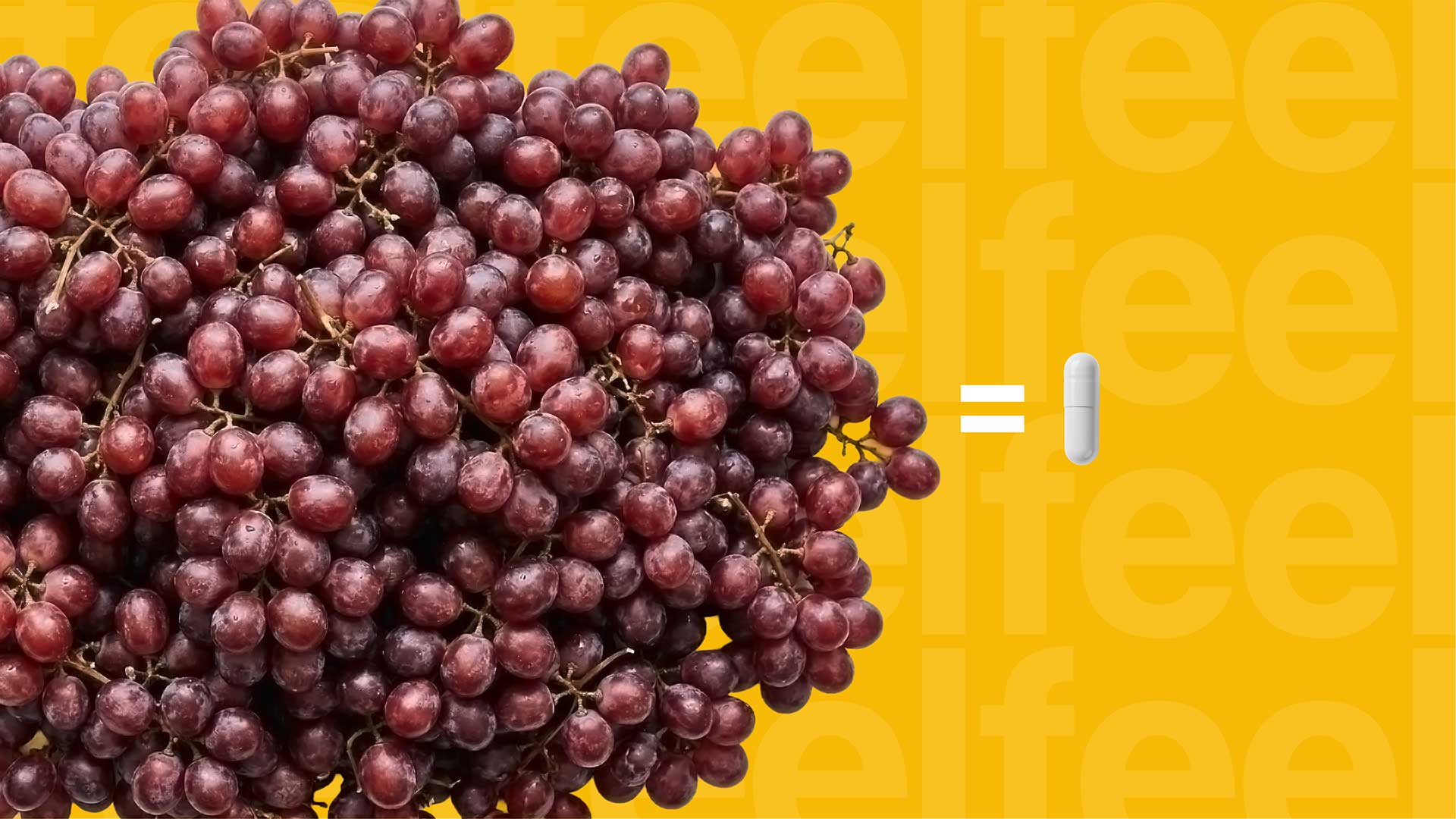
Resveratrol is a polyphenol found in grapes, berries and peanuts, though not in amounts high enough to move the clinical needle. Its big claim to fame is its ability to activate sirtuins. This family of proteins—the longevity regulators we referenced above—helps manage stress resistance and metabolic efficiency (including cleaning up zombie cells per new research). Put simply, they help cells run more smoothly and stay strong and resilient.
The thing about sirtuins is that they can’t do much of anything without NAD. And that brings us back to resveratrol. It’s not the fuel itself. It’s the accelerator. It steps on the gas, but the sirtuin engine can only run if NMN has already filled up the NAD tank.
Beyond sirtuin activation, resveratrol also plays supporting roles in:
- Antioxidant support. As a polyphenol, resveratrol offers mild antioxidant activity, helping buffer oxidative stress at the cellular level.
- Metabolic health. Early research has shown promise in areas like glucose regulation and inflammatory signaling, although evidence in humans is still limited and dose-dependent.
The biggest challenge with resveratrol is its bioavailability. It’s metabolized rapidly in the gut and liver, so only a small fraction circulates in the bloodstream in active form. That’s one reason clinical results have been mixed and why researchers often explore analogues, higher doses, or pairing resveratrol with other compounds (like NMN) to enhance efficacy.
NMN vs. resveratrol: What does science say?
In a side-by-side comparison, the biggest difference between NMN and resveratrol really comes down to the strength and consistency of the research behind them. Both are studied for their roles in healthier aging, metabolic function, and cellular resilience, but NMN currently has the edge in credible, reproducible research:
Because NMN directly increases NAD levels, it shows measurable effects in both animal and early human studies. Clinical trials have documented improvements in markers like insulin sensitivity, aerobic capacity, muscle function, and biological age scores—with results that are dose-dependent and relatively consistent across research groups. Hundreds of peer-reviewed papers now link NAD restoration to improvements in mitochondrial function, inflammation, repair pathways, and metabolic health.
Resveratrol’s evidence base, on the other hand, is promising but not as consistent. Much of the excitement came from early animal research and mechanistic studies showing strong sirtuin activation. But sirtuin activity is difficult to measure directly in humans, and resveratrol’s rapid breakdown in the digestive system complicates dosing. Human trials show benefits in specific contexts—such as insulin sensitivity or inflammatory markers—but the effects vary widely, and many studies require extremely high doses to see measurable outcomes.
A key reason for this gap comes back to the fuel-and-accelerator relationship. If NAD levels are low—which naturally happens with age—activating sirtuins without adequate NAD is like flooring the gas pedal in a car running on fumes. It just won’t get you far.
This doesn’t mean resveratrol “doesn’t work.” It means its benefits may be constrained by NAD availability, bioavailability challenges, and the inherent difficulty of studying sirtuin activation directly in humans.
The next question is pretty obvious. If NMN provides the fuel and resveratrol hits the accelerator, what happens when you use both?
NMN and resveratrol: Better together?
Now that we understand how NMN and resveratrol work, it’s natural to wonder whether they’re more effective as a team than on their own. In a word: yes. It all comes down to how these compounds interact inside the cell.
Think back to the fuel-and-accelerator analogy: NMN fills the tank by raising NAD levels. Resveratrol steps on the gas by activating sirtuins—proteins that rely on NAD to function. Boosting NAD with NMN gives resveratrol (and the sirtuins it activates) the fuel they need to do more meaningful work.
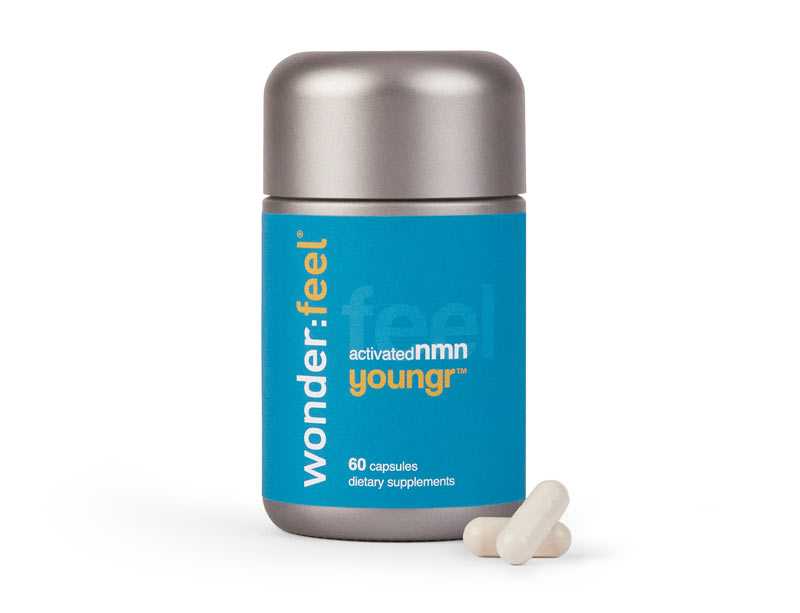
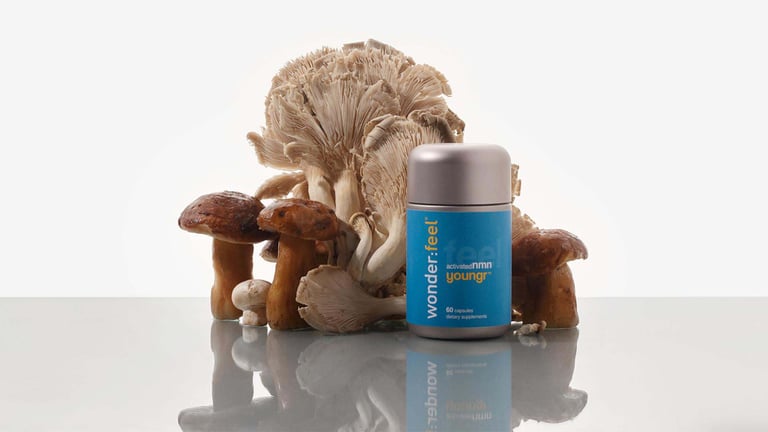
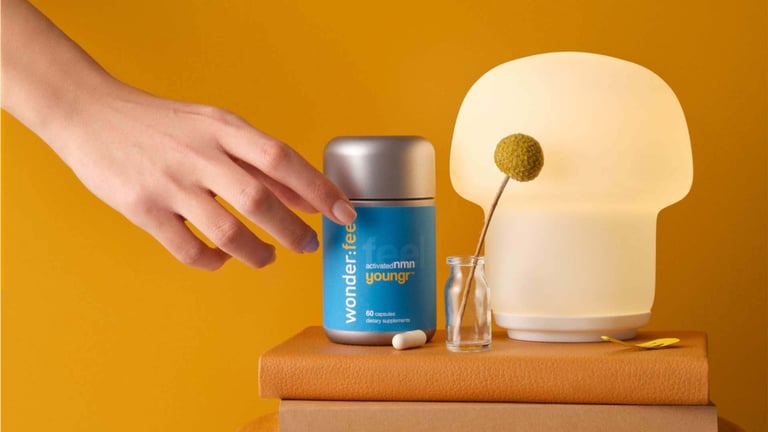
The Wonderfeel Youngr™ formula was built intentionally around this precise synergy. Each daily capsule delivers:
- 900mg NMN to meaningfully raise NAD levels
- 100mg trans-resveratrol to help activate sirtuins
- 50mg hydroxytyrosol (from olives), a potent antioxidant known for supporting cellular defense and inflammation pathways
- 4mg ergothioneine, often called the “longevity vitamin” for its unique role in cellular protection and mitochondrial health
The bottom line on NMN and resveratrol
If your goal is to support energy, cellular repair, metabolic health, and overall longevity pathways, NMN is the more direct, research-backed approach. It raises NAD levels in a measurable way and influences a wide range of processes that naturally decline with age.
Resveratrol is best thought of as a supporting player—valuable, but most effective when NAD is already abundant. For many people, that makes a combined approach more compelling than resveratrol alone.
That’s where Wonderfeel Youngr™ comes in. Pairing high-dose NMN with sirtuin activation (resveratrol), cellular defense (hydroxytyrosol), and mitochondrial protection (ergothioneine), makes for a comprehensive, multi-pathway approach that takes advantage of how these systems naturally work together. It supports NAD production, sirtuin activation, antioxidant balance, and CD38 inhibition—all of which matter for long-term cellular health.
Frequently asked questions
Can you take resveratrol and NMN together?
Yes. They’re often combined because they work on connected pathways: NMN raises NAD levels, while resveratrol activates sirtuins that rely on NAD to function. That’s why you’ll find both compounds in Wonderfeel Youngr™ NMN.
What is the main difference between NMN and resveratrol?
They’re different compounds doing different things. NMN is an NAD precursor, so it helps your body produce more NAD. Resveratrol is a sirtuin activator, so it turns on longevity-related proteins that need NAD to work.
Is NMN or resveratrol more important for anti-aging?
NMN has stronger, more consistent human data because NAD levels are directly measurable and tightly linked to key aging pathways. Resveratrol is promising but more variable on its own thanks to bioavailability challenges and its reliance on adequate NAD. If you’re choosing one, NMN has more predictable benefits.
Do resveratrol and NAD precursors (like NMN) actually promote longevity?
No supplement can claim to extend human lifespan. But supporting NAD and sirtuin pathways with NMN and resveratrol is widely considered a rational, biology-aligned approach to healthier aging.
What are the benefits of combining NMN and resveratrol?
NMN raises NAD levels, while resveratrol helps activate sirtuins that rely on that NAD to function. Together, they can support better mitochondrial health, metabolic balance, cellular protection, and even help maintain NAD levels through CD38 inhibition. That’s the rationale behind Wonderfeel Youngr™ NMN, which pairs NMN with resveratrol and other antioxidants for broader cellular support.