
Key takeaways
- Creatine works on a few different fronts for muscle growth and repair by boosting ATP production, enhancing cell hydration, and activating muscle cells.
- Muscle mass is important for daily function, metabolic health, joint support, and fighting age-related decline. That’s why creatine isn’t just for bodybuilders—it supports strength, energy, and muscle health for everyone, especially as we age.
- Creatine may also support brain health, bone density, and mood—making it a true all-around supplement.
- While taking creatine supplements after workouts may slightly enhance muscular benefits, timing is less important than taking a clinically effective dose of 3 to 5 grams every day.
There’s a lot to love about creatine, whether you’re taking it for its traditional benefit of muscle gain or its lesser-known but equally impressive ability to support healthier aging (especially in women!). The supplement has long been associated with bodybuilders and athletes, but that’s changing as more people begin understanding its value for everything from muscle preservation to bone health to cognitive function to cellular energy and beyond. Paired with a healthy diet and regular exercise, creatine is a staple for promoting physical, cognitive, and metabolic health as we age. But let’s get specific about how exactly creatine supports muscle growth, why that matters even if you aren’t looking for huge gains in the gym, and whether timing plays a role.
Creatine 101: What it is and what it does for muscle growth
Even if you’ve never personally taken creatine, you probably recognize the name. That’s likely because it’s one of the most researched (1,180 published human clinical trials and counting!) and effective supplements around, especially for enhancing physical performance and building muscle mass. That’s why bodybuilders and athletes love it so much.
But what exactly is it? The compound itself is made of three amino acids (arginine, glycine, and methionine), and it’s produced naturally in the liver, kidneys, and pancreas. You can find it in small amounts in red meat and fish as well. The creatine we produce and source from our diet is mostly stored in our muscles in a form called phosphocreatine. Along with NAD, or nicotinamide adenine dinucleotide, this is the stuff that regenerates ATP—the main source of energy for the body. When you’re pushing out those last few reps or trying to set a PR on the track—anything that requires a short burst of intensity—this is what you’re tapping into.
If you’re a regular gym-goer, you know that the reward lies in the effort. Having that extra energy means you can push yourself that little bit more and recover faster afterwards, which can lead to bigger muscle gains over time. But the beauty of creatine is that it’s not limited to what’s happening in the gym, on the track, in the pool, on the wall, or wherever you get your fitness in. Creatine actually indirectly supports muscle growth by increasing the water content in your muscle cells. It’s called cell volumization. Basically, creatine acts like a sponge, soaking up water and pulling it into muscle cells, which causes them to expand. Sure, that can mean looking pumped (another reason the gym bros love it), but it could actually have a meaningful effect on the health and growth of your muscles. It’s possible that swollen muscle cells might stimulate muscle protein synthesis, which encourages it to repair itself. Indeed, that’s been reported in animal studies, though in humans, it appears that this growth is indirect. Still, better hydration in the muscle could mean the cells function more efficiently too, speeding up recovery times.

Creatine also activates a specific type of muscle cell known as satellite cells. These guys live right outside muscle fibers, and they’re only activated when your muscles are under stress or damage. That’s what happens during resistance training—satellite cells leap into action, fusing with muscle fibers to help repair damage and sharing their nuclei with muscle cells. In time, that leads to more muscle growth. With creatine supplementation, you get enhanced satellite cell activity, and that’s a good thing.
Strength = function
For years, bodybuilders and gym rats have been clued into the benefits of creatine for muscle growth.But building and maintaining muscle is important for everyone, at any age, regardless of your personal fitness goals. It’s not about an Arnold Schwarzenegger physique or six-pack abs. More muscle makes you stronger, and that directly improves your physical function. Strong muscles make everything easier, from going up and down stairs to toting in groceries to playing with the kids or grandkids.
Muscle mass also gives your joints much-needed stability and improves your balance, which in turn reduces your risk of injury. And then there are the metabolic benefits. Muscle helps regulate blood sugar and insulin sensitivity, burns more calories even at rest, and contributes to weight management. In fact, muscle growth is considered essential for curbing metabolic diseases like type 2 diabetes and obesity.
Ever heard of sarcopenia? It’s the loss of muscle mass that begins around age 30. If you aren’t actively working to build and maintain muscle, you’re losing it—to the tune of 3-8% every decade. It’s like knocking over a row of dominos, because muscle weakness is associated with a loss of stamina, poor balance, a greater likelihood of falls, a loss of independence and a serious decline in quality of life.

The simple truth is that everyone benefits from muscle growth, and it should be part of your routine if you have any interest in healthier aging. And since creatine supports that lean muscle mass, this kind of supplementation is especially valuable. The best part? It really couldn’t be easier.
Does creatine timing affect muscle gain?
There’s a lot of discussion about when exactly to take creatine if the goal is building and maintaining muscle mass (again, a goal for us all). One of the first studies to investigate whether timing creatine supplementation around exercise had an impact was in 2013, with a small group of 19 recreational bodybuilders. Results showed that the post-training group had slightly better gains, and that’s probably because muscles are most receptive to nutrients after workouts. But other studies have found no significant differences, and a narrative review from 2021 concluded that timing creatine to workouts shouldn’t really be a concern. The bigger issue, according to the authors, is how much creatine you’re taking every day—not when you’re taking it. In other words, consistency trumps timing.
Another study looked at the potential benefit of morning versus evening intake of creatine with a small group of elite female handball players. But again, the results showed there was no significant difference relating to creatine supplementation in the morning versus the evening. The important thing is simply taking it daily.
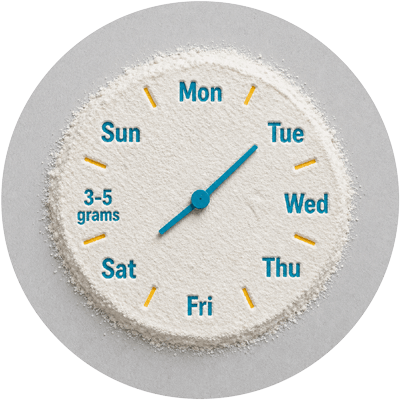
The standard daily dose of creatine is 3 to 5 grams. That’s enough to keep muscle creatine stores saturated for all of the benefits we mentioned above (and a few others we get to below). While there is an optional loading phase—20 grams daily, divided into 4 smaller doses, for 5 to 7 days—it’s not necessary. Men and women alike can both expect results by taking that clinically-backed maintenance dose of 3 to 5 grams every day.
Potential benefits beyond workouts
By now, we hope you understand the value of building and maintaining muscle, especially as we age. Supplementing with creatine can and does help, but its benefits don’t end there. Research links creatine to cognitive support, neuroprotection, bone health, even mental health. Let’s hit the highlights:
- Cognitive enhancement. Remember how creatine fuels ATP? That’s important for your muscles, sure, but it’s even more important for your brain. Brain cells need ATP to keep all that cognitive action humming, and research shows creatine can help support brain energy metabolism for improved cognitive performance. Plus, it appears to reduce mental fatigue and improve cognition in stressful scenarios, like sleep deprivation.
- Neuroprotection. Some research suggests creatine supplementation can reduce oxidative stress by acting as an antioxidant, which helps protect brain cells. What’s more, low creatine levels in the brain are associated with neurodegenerative disorders—and the bigger the shortfall, the more severe the disorder.
- Bone health. Stronger muscles generate more force when they contract, which pulls on bones. That pulling action creates stress on bones, and it’s a good thing. It means bones work to increase mass and strength, which makes them denser and more resilient.
- Mental health. Some research suggests creatine supplements can help improve mood and reduce symptoms of depression when used as an adjunct treatment.
Remember, all of these benefits are the result of saturated creatine stores in the muscles and brain. That happens over time, which is why daily dosing is so important. It really doesn’t matter if you’re taking creatine in the morning, afternoon, or evening—timing doesn’t appear to affect its neurological or physical impact.
Make creatine a habit you love.
ChocoCreatin™ delivers 4g of pure creatine monohydrate with single-origin cacao and creamy peanut butter—because the best supplement is the one you actually take.

The bottom line
Creatine is a proven, versatile supplement that goes beyond just muscle building. By supporting energy production, muscle repair, and cell hydration, it helps you maintain strength and function throughout life. Its benefits for brain health, bone density, and mood make it a smart addition to any wellness routine, especially as we age. Rather than worrying about the perfect time to take it, focus on consistent daily dosing—3 to 5 grams a day is all you need to reap the rewards. Paired with regular exercise and balanced nutrition, creatine can be a simple but powerful tool to help you stay strong, sharp, and resilient for years to come.
Frequently asked questions
Is it better to take creatine before or after a workout?
Research seems to suggest that taking creatine after a workout, not before, is a little better for muscle growth. But more important than timing is consistency—aim for 3 to 5 grams of creatine every day not only for stronger muscles, but cognitive support, bone health and mental health. ChocoCreatin™ is Wonderfeel’s take on making that daily habit one you’ll actually stick with—four grams of pure creatine monohydrate, fair-trade cacao, and creamy peanut butter.
Does taking creatine at night affect sleep?
Most people don’t have sleep issues if they take creatine at night. It’s not a stimulant like caffeine, so it doesn’t affect heart rate or alertness. There is a small chance for digestive discomfort if you have a sensitive stomach, so try taking creatine earlier in the day if that disrupts your sleep.
Will timing matter if I already take creatine every day?
Timing isn’t the most important consideration with creatine, especially if you’re already taking it. Focus on consistency and a clinical dose of 3 to 5 grams every day to reap the benefits for muscle growth and other benefits, like cognitive support, bone health, and mental health.