
Key Takeaways
- Hair growth supplements can help, but only in the right context. They’re most effective when hair loss stems from nutrient deficiencies, stress, or hormonal shifts.
- Biotin is popular but limited and best for deficiency, while collagen, vitamins D and iron, and omega-3s play bigger roles in overall hair health.
- Saw palmetto and other DHT-blockers may help with mild androgen-driven loss but are best used alongside prescription treatments.
- Nutraceutical blends and longevity compounds like NMN represent the next wave of hair health support, targeting oxidative stress, inflammation, and follicle vitality at the cellular level.
Hair growth supplements are having a moment in 2026, with social media trends and dermatologist-backed brands pushing gummies, capsules, and powders that promise thicker, fuller locks. And we get it—who doesn’t want better hair days? Millions of men and women around the world are dealing with hair loss and thinning, and an easy fix courtesy of the supplement industry obviously has its appeal. While a lot of hair growth supplements don’t deliver, there are vitamins, mineral, and plant extracts that are backed by clinical evidence for supporting healthy hair growth. The thing is, even researched ingredients work differently depending on factors like gender and the underlying cause of hair loss. In this guide to hair loss supplements, we’re clarifying expectations, running through popular ingredients like biotin, collagen, and NMN, and explaining what’s worth the money—and what definitely isn’t.
Why hair growth supplements are booming in 2026
So, is everyone losing their hair these days or what? It’s true that the global hair growth supplement market has rapidly expanded in recent years and especially in 2026, and hair loss and hair thinning are among the most common cosmetic concerns for men and women alike. Chalk it up to ever-climbing stress levels, hormonal changes, nutritional gaps, and post-illness hair shedding (thanks, Covid-19), which makes it easy to understand why hair health is suddenly a top priority for so many.
There’s also an accessibility component. Products that were quite niche just a few years ago have become surprisingly mainstream, thanks to social media platforms and influencers amplifying downright dramatic before-and-after transformations—usually tied to trendy brands and partnerships. At the same time, a shift in consumer mindset has more people embracing a proactive approach that focuses on prevention and self care. Just like collagen has become a staple for supporting skin, hair growth formulas are increasingly part of people’s daily routines. Newer longevity compounds like NMN are starting to make their way into the conversation as well—not just for energy and cellular health, but for hair vitality too.
Of course, good ol’ fashioned marketing goes a long way, too. A lot of the most popular hair growth supplements stack multiple active ingredients—biotin, collagen peptides, saw palmetto, vitamin D, adaptogens, magic fairy dust—into a single serving. Consumers love that idea because it’s convenient and comprehensive (or so it appears, at least). All in all, the hair growth supplement boom is kind of a perfect storm of genuine need, aggressive marketing, social proof, and evolving beauty standards.
And let’s take a second to draw a distinction between hair growth supplements, which is what we’re covering here, and prescription medication. Supplements generally work best as supportive tools to fill in nutritional gaps, reduce oxidative stress, or modestly slow down pathways like DHT activity (something we get into later). Prescription products, on the other hand, directly target the mechanisms driving hair loss. Finasteride, for example, blocks the conversion of testosterone to DHT, while minoxidil stimulates follicles to stay longer in the growth (anagen) phase. That’s why prescriptions tend to produce more dramatic results, particularly in androgenetic alopecia (the most common type of hair loss). In many cases, the best outcomes come from a combined approach: using prescriptions for the heavy lifting and supplements for overall scalp and follicle support.
Do hair growth supplements actually work?
The million dollar question! The short answer is sometimes, but not always, and not for everyone. The tricky part is what’s actually causing that hair loss or thinning, and that can vary pretty significantly. Hair growth itself is complicated, influenced by things like genetics, hormones, nutrition, stress, and aging. If your hair issues stem from nutritional gaps or hair health issues, supplements really can make a difference. If you’re dealing with, say, male pattern baldness, not so much. Let’s flesh that out a little.
Male pattern baldness: Androgenetic alopecia
The most common type of hair loss in men is called androgenetic alopecia. You know it when you see it—that receding hairline that gives men that U-shaped forehead, along with thinning hair at the crown that can eventually meet in the middle. It’s gradual and progressive, with a genetic factor and a sensitivity to dihydrotestosterone, or DHT (a type of male sex hormone). In other words, some people are just genetically predisposed to have hair follicles (especially at the temples and crown) that are sensitive to DHT. When DHT binds to these follicles’ receptors, it shortens the hair growth cycle, leading to thinner hair. Eventually, the follicle just stops producing visible hair altogether.
Some supplements can inhibit DHT, albeit modestly, but the best approach for this type of hair loss is usually a prescription.
Telogen effluvium and hormonal shifts in women
When women start losing their hair, it’s more commonly related to stress, nutritional deficiencies, thyroid issues, or hormonal changes (like postpartum and perimenopause). Unlike male pattern baldness, which has a pretty predictable pattern, women tend to experience what’s known as diffuse thinning, when hair becomes uniformly thinner across the entire scalp, or a widening of the part. It’s called telogen effluvium, and it actually affects both men and women, but women tend to be more susceptible. Basically, a higher-than-average number of hair follicles all enter the shedding, or telogen, phase all at once. That might be due to physical or emotional stress, which shocks the hair cycle and leads to shedding a few months later. Insufficient amounts of iron, vitamin D, zinc, or protein can all contribute to weakened follicles, which means more shedding. Hormonal changes are the biggie, with postpartum estrogen drops or perimenopausal changes in estrogen and progesterone often resulting in very noticeable shedding. Thyroid conditions are also linked to hair thinning.
Women can also experience a form of androgenetic alopecia—female pattern hair loss—which usually appears as gradual, diffuse thinning across the crown rather than a receding hairline.
On the plus side, this type of hair loss is usually temporary and reversible—you just need to figure out the triggers (because usually, there’s more than one). And in even better news, supplements are more likely to help here, because they can restore missing nutrients, ease oxidative stress, and support scalp health, all of which can make a very visible difference.
Best hair growth supplement ingredients
There are a lot of options out there, some with truly unbelievable claims, but the most effective products come down to a few well-studied nutrients and compounds that target specific pathways linked to hair loss and growth. And again, efficacy depends on the cause.
Biotin
Biotin is the most searched supplement for hair growth—and it has been for years. At this point, they’re practically synonymous. Biotin plays a major role in keratin development, which is the structural protein in our hair, skin, and nails. If you’re biotin deficient, supplementation really can help, but its popularity is mostly because it’s pretty safe and it’s so strongly associated with hair health. For most people with normal biotin levels, results are modest at best. Brands like Hims and Hers include biotin in their formulations, along with other actives like saw palmetto and vitamin D for a more comprehensive approach to hair health.
Collagen peptides and keratin support
Collagen provides amino acids like glycine and proline that help strengthen the hair shaft and support follicle health. Hydrolyzed collagen peptides are especially popular because they’re easy to digest and absorb (i.e. they have the most bioavailability). Some formulas also include keratin, the protein that makes up most of the hair strand, to reinforce structural integrity and reduce breakage. Viviscal is one of the longest-running hair growth brands, and it relies heavily on a marine collagen complex to support thickness and density.
NMN (nicotinamide mononucleotide), ergothioneine, and resveratrol
Thrillingly, at least here at Wonderfeel, longevity compounds are entering the chat. NMN is first and foremost an NAD precursor that helps restore NAD levels to more youthful levels. But hair growth is a happy side effect that many people are experiencing. A few timely examples from Wonderfeel customers:
I’ve been taking Wonderfeel NMN for about 6 weeks. I’ve noticed my nails and hair seem to be growing faster.
I am sleeping better, and friends see improvement in my skin and hair.
My hair looks and feels healthier and more luxurious.
My nails grow faster than ever and the roots of my hair seem darker, more vibrant.
NMN is currently being explored for its role in supporting follicle vitality and reducing oxidative stress at the cellular level. A 2024 study with mice found that NMN can reverse hair follicle atrophy, hair thinning, and hair sparsity by reducing inflammatory factors, increasing hair follicle growth factor activity, and inhibiting follicle growth blockers. NMN also helps reduce inflammation and supports blood flow to the scalp, which brings oxygen and nutrients to the very follicles that need them for healthy hair growth.
Ergotheinene, or ergo, is another component in Wonderfeel Youngr™ NMN. It’s a rare antioxidant dubbed the “longevity vitamin,” and it accumulates in high-energy tissues—including the skin and hair follicles—where it protects cells from oxidative damage and supports mitochondrial function. By reducing UV- and pollution-induced oxidative stress, ergo may help preserve pigment cells and delay premature graying. Its ability to neutralize reactive oxygen species complements NMN’s NAD-boosting effects—think of it as a one-two punch for follicle resilience and growth.
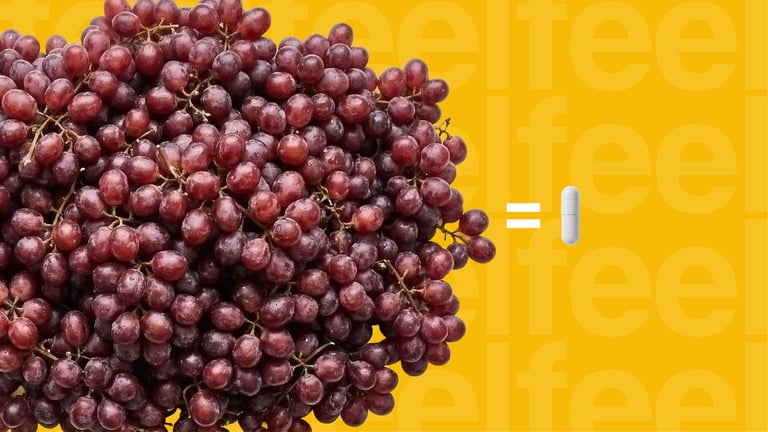
Then there’s resveratrol, the very same polyphenol found in red grapes and berries. Beyond its reputation for cardiovascular and longevity benefits, resveratrol has been shown to stimulate growth centers in hair follicles and extend the growth phase of the hair cycle. It also enhances circulation and works beautifully with NMN to muffle the inflammatory signaling that contributes to hair shedding and scalp aging.
Together, NMN, ergothioneine, and resveratrol represent a new wave of nutraceuticals that address hair health and growth from a healthy aging perspective.
Saw palmetto and other DHT-blocking botanicals
We’ve already covered that in some men (and actually, in some women too), hair loss is tied to DHT, which shrinks hair follicles over time. Saw palmetto, pumpkin seed oil, and green tea extract are among the botanicals shown to inhibit DHT activity, making them useful natural options for androgen-related hair loss. But again, this is usually most effective as an adjunctive therapy, not a standalone treatment, to something prescription strength. That’s why branded products, like Hims and Hers formulations, include saw palmetto as a natural complement to prescription finasteride. For advanced hair loss, prescription options (which also includes topical minoxidil) remain more effective than most supplements.
Vitamins and minerals
Your hair needs specific micronutrients to grow, and vitamin D is a big one. In fact, a vitamin D deficiency is linked to telogen effluvium. Iron and zinc are equally important for follicle function, and a lot of well-rounded hair supplements include them in balanced doses for hair health. Nutrafol, another popular brand, includes vitamin D, zinc, and iron alongside adaptogens to address different hair-loss pathways.
Omega-3 fatty acids and antioxidant blends
Omega-3s (from fish oil, algae oil, or flaxseed) support scalp health by reducing inflammation and improving circulation. Antioxidants like vitamin C, vitamin E, and polyphenols from botanicals help combat oxidative stress—a major factor in premature follicle aging and hair loss. Nutrafol goes a step further with tocotrienols, a potent form of vitamin E with antioxidant properties that may improve hair density.
Prescription-adjacent nutraceuticals
Nutraceuticals are one of the fastest-growing categories in the hair growth supplement world. Brands like Nutrafol and Viviscal combine multiple actives—vitamins, minerals, botanicals, and adaptogens—to address several hair-loss pathways at once. This multi-targeted approach appeals to people who are looking for comprehensive, all-in-one solutions.
The bottom line on hair growth supplements
Hair growth supplements aren’t miracle pills, but they can help support stronger, healthier hair. That’s particularly true when hair loss is linked to what you eat, how stressed out you are, and whether you’re navigating any hormonal changes. The key is figuring out what’s causing hair thinning or shedding, and then using supplements that target the root cause. For men with androgenetic alopecia, prescriptions may still be the most effective option, while women often see more benefit from nutrient support.
The hair growth supplement market will keep booming in 2026 and beyond, but not all products are created equal. Focus on evidence-backed ingredients like collagen, saw palmetto, and essential vitamins and minerals, and you’d be smart to pay close attention to emerging players like NMN that bridge the gap between longevity science and hair vitality. Pairing smart supplementation with medical guidance and healthy lifestyle habits is the best way to set realistic expectations—and better hair days.
Frequently Asked Questions
Do hair growth supplements really work for male pattern baldness?
Hair growth supplements won’t work for male pattern baldness on their own. Androgenetic alopecia, or male pattern baldness, is driven by genetics and a sensitivity to the hormone dihydrotestosterone, or DHT. Some botanicals, like saw palmetto, can mildly inhibit DHT, but it’s not enough to stop or reverse balding. Prescription treatments like finasteride and minoxidil are more effective.
What is the best supplement for hair?
The best supplement for hair depends on what you’re trying to accomplish. Generally, the best supplements tend to be collagen peptides to strengthen the hair shaft, omega-3s and antioxidants for scalp health, biotin if you’re deficient (though most people aren’t), and vitamin D, iron and zinc, again, if you’re deficient.
Do hair supplements actually work?
Hair growth supplements can work if your goal is to stop shedding, strengthen hair, and support follicle health, and if your issues stem from nutritional gaps, stress, or hormonal shifts. They’re not very effective for genetic-driven balding.
What stimulates hair growth best?
For men with androgenetic alopecia, finasteride and minoxidil are the most effective. For women, addressing underlying issues (like low iron, thyroid imbalance, or hormonal changes) often makes the biggest difference. Supplements can support healthier hair, but lifestyle, medical treatments, and scalp care are usually stronger stimulators.
Do any supplements improve hair growth?
Supplements can improve hair growth if you’re deficient in vitamin D, iron, or zinc. Collagen peptides, saw palmetto, and some nutraceuticals also have clinical studies showing reduced shedding and improved density, especially in women.
Can supplements replace minoxidil or finasteride for hair growth?
Nope. Supplements can be a helpful addition, but prescription treatments directly target the biological pathways of hair loss. The best outcomes often come from combining prescriptions with supplements and lifestyle support, not replacing one with the other.