
Key takeaways
- NAD is a coenzyme that powers energy production, DNA repair, and antioxidant defense.
- NADH is the charged form of NAD responsible for delivering electrons to produce ATP.
- NMN is an NAD precursor that converts into NAD in the cells, helping maintain optimal levels even as you age.
The longevity space is full of acronyms, and NAD, NMN, NADH are tossed around regularly on supplement labels, in research labels, and in biohacker forums. But what do they actually mean? While the shorthand definitely makes things easier than stumbling through formal names like nicotinamide adenine dinucleotide and nicotinamide mononucleotide, it can also blur key distinctions. What differentiates, say, NAD from NADH? If it’s a burning question on your mind, you’re in the right place. Let’s take a closer look at NAD, NADH, and NMN, including what they are, how they work, and why the difference matters for anyone interested in energy, aging, and overall cellular health.
What are NAD, NADH, and NMN?
NAD, or nicotinamide adenine dinucleotide, is a coenzyme found in every last cell in your body. Dr. Andrew Salzman, the chief medical officer here at Wonderfeel and a renowned biomedical researcher, describes NAD as the centerpiece of our biology because its role simply can’t be overstated. It’s used in some 500 enzymatic processes in the body, including three key functions: energy metabolism, DNA repair, and antioxidant defense.
NAD production naturally declines with age, and by the time we’re 50, we have roughly half the NAD we did in our twenties. Considering all of the ways this molecule is used, it’s problematic—to say the least. Age-related issues, like a foggier mind, slower recovery times, a sluggish metabolism, and less resilience in our skin, hair, and overall cellular health, are all related to less NAD in the body.

NADH, or nicotinamide adenine dinucleotide (reduced form), is the energy-rich counterpart of NAD. The “H” indicates that this molecule is “holding” a hydrogen atom, along with two electrons. As you’ve likely guessed, NAD and NADH are two forms of the same molecule—they just serve different roles. NAD accepts electrons, and NAD delivers those electrons to produce ATP. You’ll recall from biology 101 that ATP, or adenosine triphosphate, is our cellular energy currency. Quick note: While you can find both NAD and NADH supplements on the market, neither raises NAD levels—the target for healthy aging. NADH in particular is best reserved for very specific clinical or therapeutic uses under medical guidance.
NMN, or nicotinamide mononucleotide, is a molecule all its own. It’s a direct precursor to NAD, and it’s also produced naturally in the body. But like NAD production, NMN production declines with age. And unlike NAD and NADH, science has made it clear that supplementing with NMN, like our own Wonderfeel Youngr™, can help support healthy NAD levels.
It’s a big deal. Raising NAD levels in the body means more cellular energy, more DNA repair, a stronger immune system, and stronger, healthier cells. And yes, that means those age-related issues could actually be improved—things like a zippier metabolism, a sharper mind, stronger muscles and cells, even improvements to skin and hair are all common effects of NMN supplementation.
How do NAD, NADH, and NMN work in the body?
All three molecules are players in the complex and downright elegant cellular system that keeps your body running. NAD is the coenzyme that moves electrons during specific metabolic reactions. When it accepts electrons, it becomes NADH and its job is to deliver electrons to the transport chain in the mitochondria. The energy from the delivered electrons is used to make ATP, which, in turn, is used every time you blink, think, move, breathe—you get the idea.
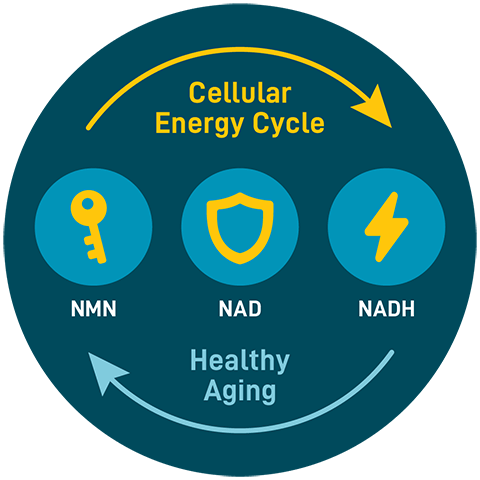
NMN supports this upstream process from NAD to NADH by ensuring that your cells have enough NAD to keep the whole energy cycle going. When you don’t have enough NAD—and remember, NAD levels naturally decline with age—the entire cycle slows down. Less NAD means less NADH, which means less ATP, which means less energy and support for DNA maintenance and cellular defense. That’s why NMN supplementation is such a major focus of longevity research—it keeps the NAD cycle moving.
Why the NAD/NADH ratio matters
The balance between NAD and NADH in the body can be a prime indicator of cellular health and metabolic efficiency. A higher ratio often means better mitochondrial function, more efficient energy metabolism, and a healthier redox balance. A lower ratio—too much NADH relative to NAD—can signal metabolic stress or mitochondrial dysfunction. That’s because an accumulation of NADH can negatively affect the activity of sirtuins and PARPs. These enzymes regulate DNA repair, stress response, and longevity—and they’re activated by NAD, not by NADH.
The NAD/NADH ratio is sensitive, and poor lifestyle habits and conditions (think chronic overeating, a nutritionally void diet, metabolic syndrome, obesity) can skew it toward NADH. Intermittent fasting, consistent exercise, and supplements like NMN and NR (nicotinamide riboside), on the other hand, tend to raise NAD levels, which has a positive effect on this ratio. It begs the question—how do you choose a supplement that supports a healthy NAD/NADH balance?
Which supplement is best—NAD, NADH, or NMN?
While NMN supplements get most of the attention in the longevity world, for good reason, there are NADH supplements out there. The reduced form of NAD is a bit of a niche product and generally used clinically or occasionally for a quick boost in mental clarity, mood, or stamina. But again, it doesn’t raise NAD levels, and too much can negatively skew the NAD/NADH ratio. Plus, since there is a chance of interactions with other supplements and medications, NADH is best explored under the guidance of a medical professional and not as an everyday supplement.
NMN, on the other hand, is quite a bit easier to integrate into your wellness routine. And unlike taking NAD directly, which isn’t particularly effective because it’s difficult for the body to absorb and use, NMN has no issues making it safely to your cells. There, it’s whisked inside on its very own shuttle and converted directly to NAD. And that, after all, is the goal.
The bottom line: NAD vs NADH vs NMN
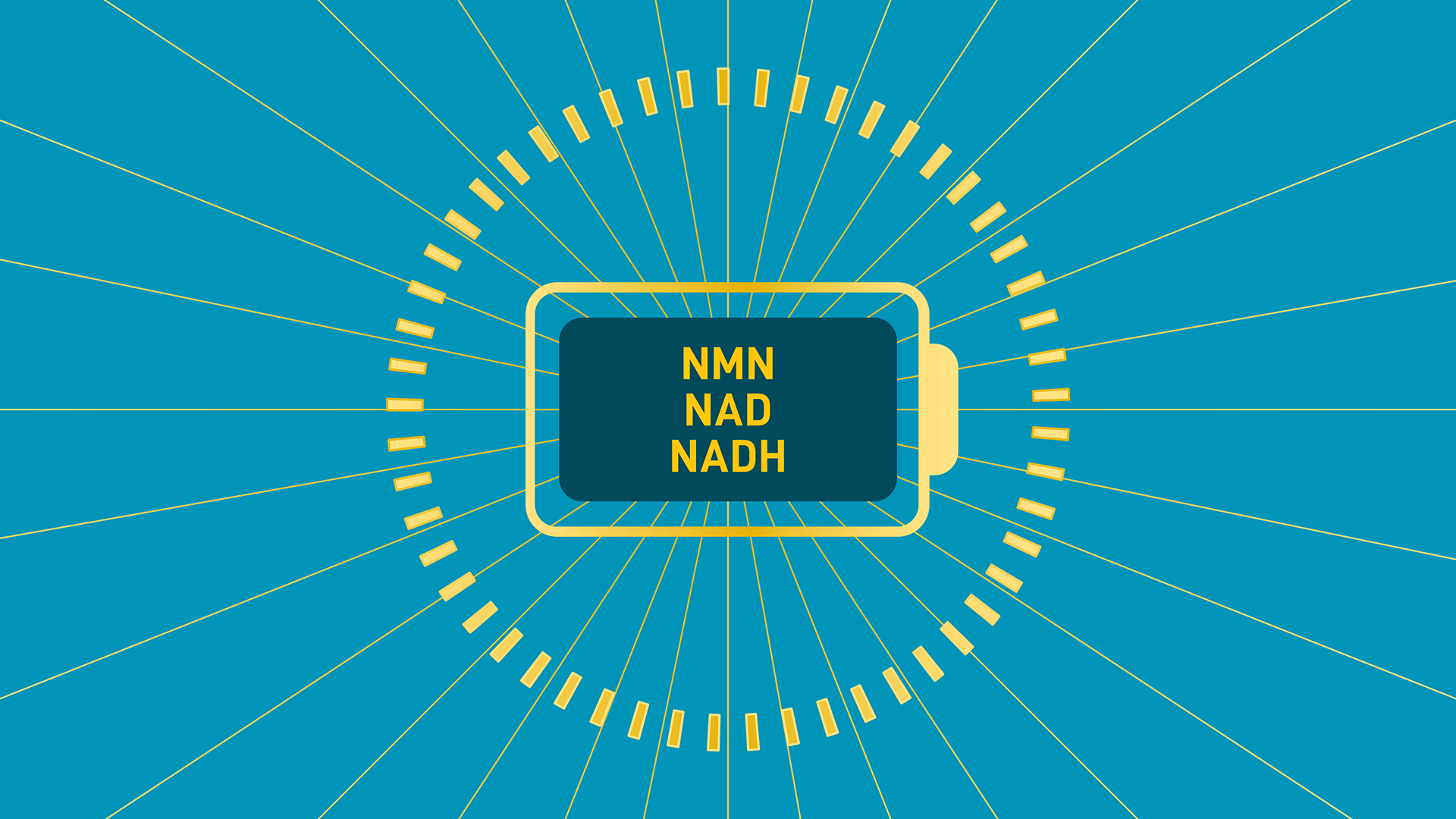
NAD, NADH, and NMN are all essential parts of the body’s cellular energy cycle. NAD powers core biological processes, NADH delivers energy, and NMN helps keep NAD levels steady. Understanding how they work—and how to support them—can help you make informed choices for energy, vitality, and healthy aging.
Frequently asked questions
Is it better to take NAD or NADH?
Neither! If the goal is supporting NAD levels in the body, you’re better off with an NAD precursor like NMN or NR. These supplements efficiently make their way to your cells, where they’re converted directly to NAD.
Should I take NADH supplements?
Most people shouldn’t take NADH supplements, which don’t raise NAD levels (the real goal for supporting longevity and healthy aging). Occasionally, NADH supplements are used clinically or for short-term energy boosts. But that’s typically done under a doctor’s care.
Is NAD to NADH oxidation or reduction?
When NAD gains electrons (and a hydrogen atom), it’s reduced to NADH. When NADH donates those electrons to make ATP, it’s oxidized back to NAD.
What is the function of NAD and NADH?
NAD is a critical coenzyme in the body, and it’s involved in over 500 reactions, including energy metabolism, DNA repair, and cell signaling. NADH is the reduced form of NAD, responsible for delivering electrons to mitochondria to generate ATP.
Is NADH better than NMN?
It depends on your goals. NADH doesn’t raise NAD levels, so if you’re thinking longevity, an NAD precursor supplement like NMN is the better choice.
Can supplements increase both NAD and NADH?
You bet! NAD precursors like Wonderfeel Youngr™ boost NAD levels, which means more NADH is produced during energy metabolism. That supports a healthy NAD/NADH ratio, which is really important for efficient mitochondrial function.